
0.7.36: browser and Android fixes, painted nameplates, and boss entrances

0.7.36 is out on Steam, the itch.io downloads, the browser version, the Android download and the demo. Most of this update is fixes. In the browser the page froze while the game loaded, and the title screen's signposts could blow up to fill the screen. On phones the game's memory climbed through a run, and the long zoom out past the desk had been switched off since 0.7.30 because of a crash. Those are fixed, and so is a crash on a Mac's first launch. Then there is a lot that is new to look at: painted nameplates for every lord and warlord, a new entrance for elite and boss fights, pop-ups that arrive as sheets of card, a new vow room, a carpet of two lands under the last fight, and relics are now called pins.
The browser version
The title signposts. Hovering a signpost on the title screen lifts it on a spring. That spring was worked out once a frame, so any frame of 50 ms or more (a hitch, or a machine running under 20 fps) made it run away: the board grew without limit, flickered at its edges and went off the screen. A playtester was left looking at a giant Quit board. The springs now step in small slices of time and are held to their range, so a slow frame can no longer throw them.
Loading. The page used to freeze while the game loaded: 11.5 seconds with nothing drawn and no input taken on a fast PC, and 81 seconds with Chrome slowing the CPU to a quarter of its speed. It now loads the way the desktop version does, behind the studio card, which keeps drawing the whole time. The longest stall left is about 3 seconds (6.6 with the CPU slowed), and the title answers the pointer 15 to 19 seconds after the page opens.
Frame rate. In the browser every draw call is paid for twice, once by the page and once by Chrome's graphics process, so the work went into drawing fewer things. The dots along the map's trails were one draw each and are now drawn together: a run's first map went from 2,368 draw calls to 464. The mug, plant, tape and the rest of the desk around the mat are no longer drawn when they are out of shot, which takes a first fight from 1,518 draw calls to 1,268 on every platform, with the same picture.
The whole campaign. A recorded run was then played through the browser version in Chrome, from the title to the end: all three acts, 16 fights and 83 screens in 30 minutes. Its memory stopped rising at the end of act 1 at about half of what the browser allows, and stayed there through acts 2 and 3.
Phones
The long zoom is back. In 0.7.30 the long zoom out past the desk was made desktop-only, after a phone crashed a few seconds after zooming out of the first fight. The cause has now been found. A looped sound tells the engine where its loop ends, and the room's clock tick, the weather and the other long backing sounds all set that end one frame past their last real frame. A desktop reads whatever happens to be there and carries on. A phone keeps guarded memory after a big block, the clock tick's loop ended right on it, and the game crashed. Every looped sound now ends on its last frame, and the long zoom works on phones again. On every platform, the wind over the fields in the long zoom now plays all 9.5 seconds of its loop instead of repeating the first 1.9.
Memory. A phone's memory use climbed screen by screen through a run, and a game holding a lot of memory is the first one Android closes. The biggest parts of that climb are gone:
- Text caches. The engine keeps a cache of letter pictures for every font at every size it has drawn, and never empties one. By the end of a run these held 151 MB of memory and 123 MB of video memory on a phone. The ones the game no longer draws from are now cleared when the screen changes, and on a phone and in the browser all of them are cleared as you go into a fight and at the end of each act.
- The title screen's marchers. Each marching figure kept its picture for the rest of the session, so after sixteen minutes on the title the game held 412 of them, about 310 MB of video memory, and carried them through the whole run. Now it keeps the pictures on the road and a small store of the rest.
- The long zoom's room was built behind every fight from its first frame, about 25 MB of memory and 20 MB of video memory each time, and about 1,070 extra draw calls on a phone. On a phone it is now built the first time you zoom out that far.
- The highlight clips for the end-of-run reel kept every frame in memory after saving it to disk, 17 MB by act 2. They let go once each clip is saved.
- On 0.7.35, the guard that frees pictures when a phone runs short of memory mistook the game's own start-up for a climb, and cut every picture budget to a quarter for the rest of the session on some phones. It now waits until the game has finished starting.
Battery. On one phone the game drained the battery and ran it hot even while plugged into a computer. It drew a whole frame sixty times a second on every screen, and nearly every screen has something moving all the time: the marchers on the title, the dolls on the map, the soldiers bobbing in a fight. On phones the game now draws sixty frames a second while anything is happening (a finger on the screen, a card in flight, a fight playing out) and thirty while only those idle loops move. With battery saver on, or the phone running hot, it draws thirty throughout, fights included.
Macs
On a Mac the first launch could crash while the window was sized to fit the screen. Reduce Motion skips the animation that set it off, which is how some players got past it. The window is now sized outright, with no animation.
The Steam overlay never loaded on any Mac build until now, because of a mistake in how the game was signed. It loads now, so Shift+Tab and the War Council's Invite work on a Mac.
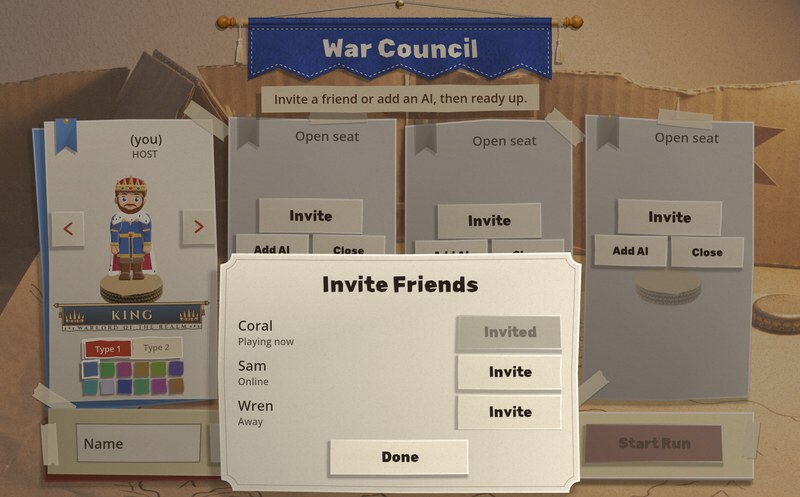
Invite also no longer depends on the overlay anywhere. If the overlay doesn't open, the War Council lays out its own list of your Steam friends who are online, the ones already playing first, and each Invite goes straight to their Steam chat.
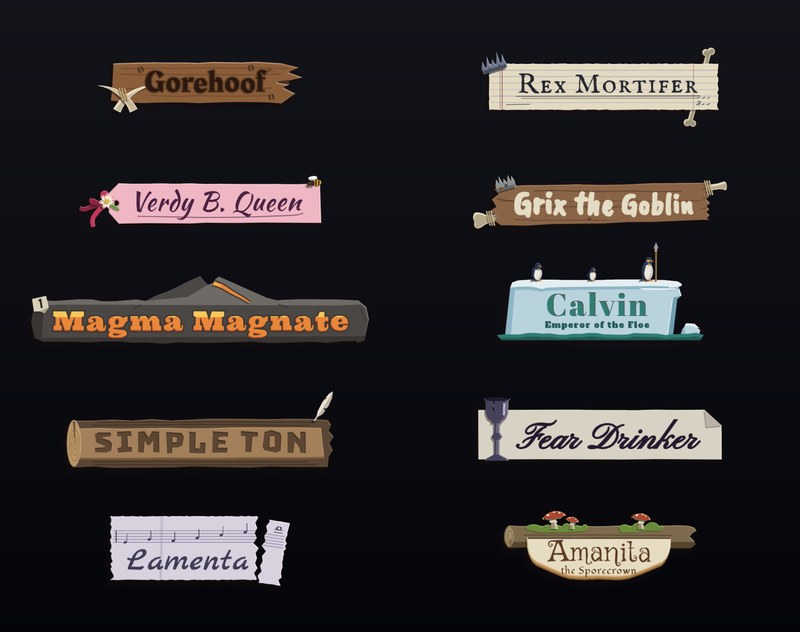
Painted nameplates
Every enemy lord's nameplate is now painted on an object out of his own world. Gorehoof's is the fence rail he charged through, with his name burnt in. Rex Mortifer's is a page torn from his ledger with his name as the heading, Verdy B. Queen's is the gift tag she was tied up with, and Calvin's is a block of sea ice with his penguins standing on it. There are 46 plates, each painted separately in English and all ten translations, so in German Gorehoof's rail is branded Bluthuf. They land and stay still.
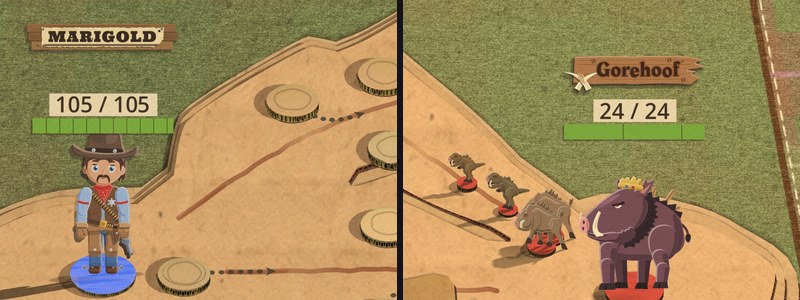
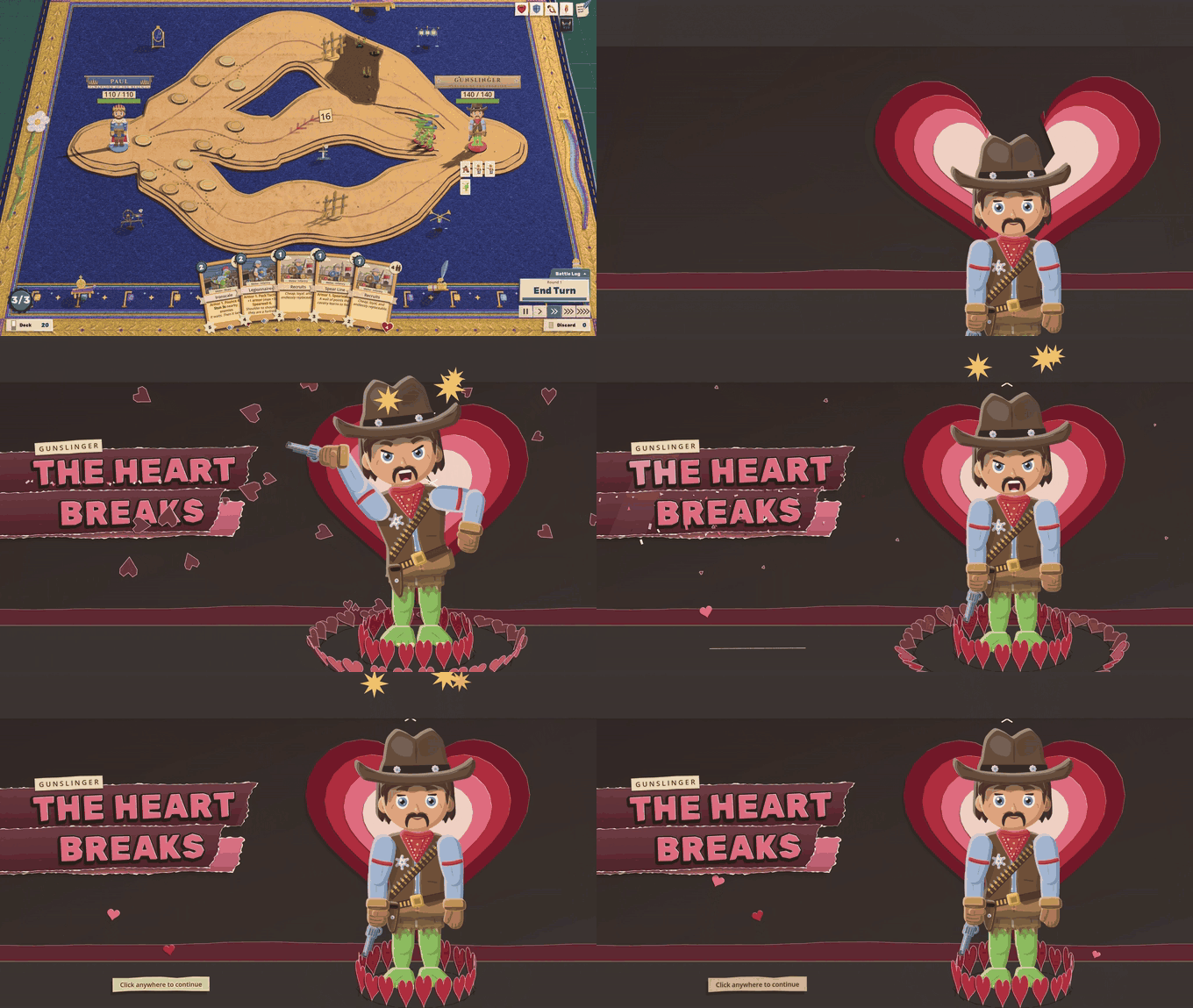
The 14 warlords' signs take any name. Each is drawn in several widths, and the game picks the narrowest one that holds your name and prints it in that warlord's own lettering. The Gunslinger's is a reward bill nailed to saloon planks. Here he is under the sample name Marigold, facing Gorehoof, with the two ends of the same moment cropped side by side:
A new entrance for elite and boss fights
Elite and boss fights now open on the lord's entrance page. A screen-sized sheet rolls on from his side of the board, printed with his own lair, and he comes out into the middle of it the way he arrives at his phase breaks. He lands with a slam, the camera creeps in while he holds, and the page peels back off onto the field. A boss holds for 2.3 seconds and an elite for 1.4, and a click cuts the hold short. This replaces the big sign that used to be ripped off the screen; ordinary fights still open under that.
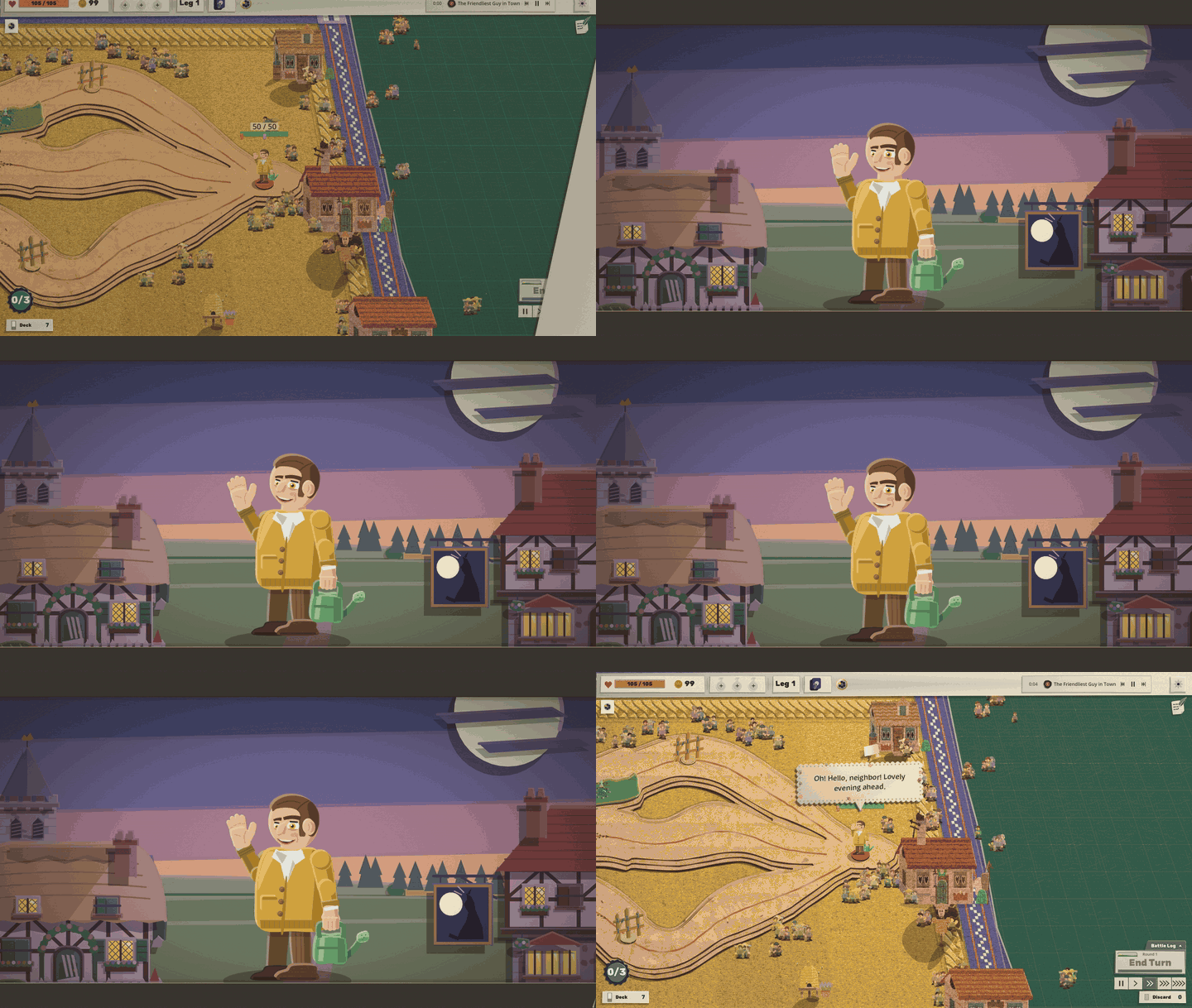
The act bosses' plates
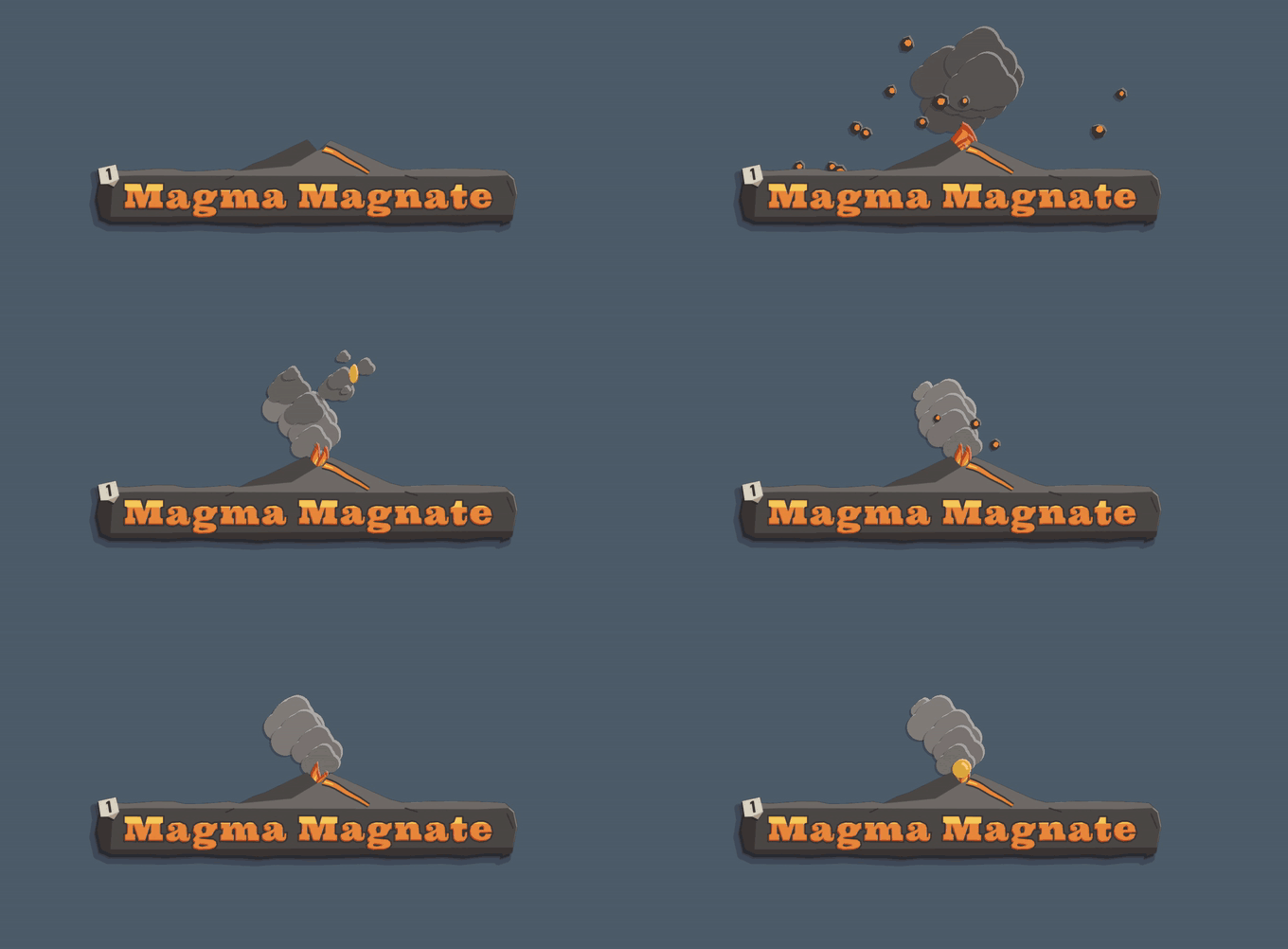
Each act boss's nameplate stands in a little paper scene of his own: the Elder Treant's roots and leaves, Verdy's blooms and bees, Wally's daisies by day and moths at moonrise, the Magnate's volcano, Rex's ledger riffling, the Colossus venting steam, the Avatar's squall and frost, and Calvin's floe landing in the sea. On the screen after you beat him it bursts out in full and keeps going. Over his head during the fight it plays quietly, with fewer and smaller pieces. Reduce Motion turns it off. Here is the Magnate's, on a plain backdrop:
Pop-ups are sheets of card
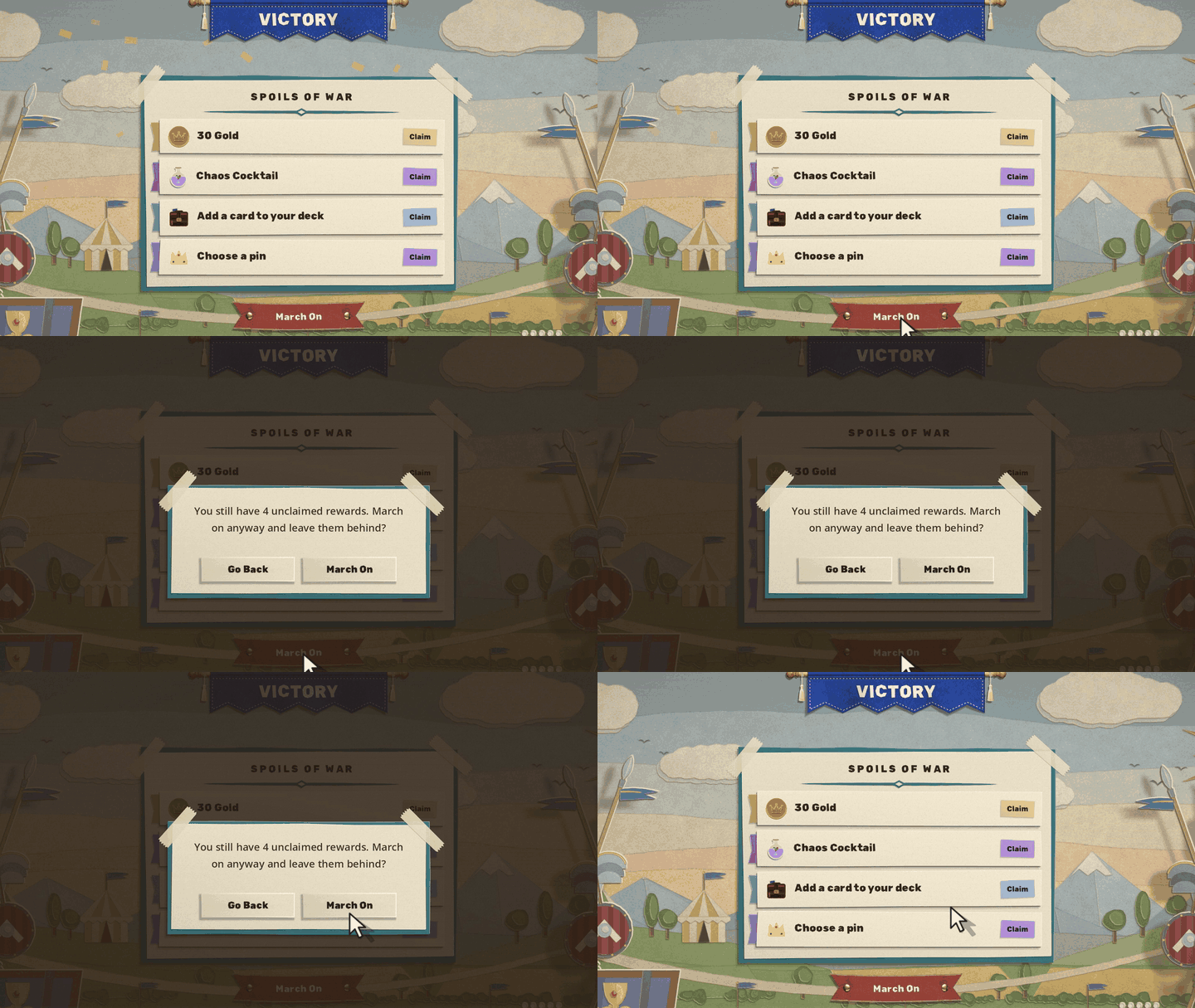
Every pop-up that used to fade in and vanish is now a stiff sheet of card, and each one comes on and goes off its own way. The first-launch notice hangs on a pin. The spoils' ask is tossed onto the mat, and March On sweeps it off toward the road. The settings Yes and Cancel are dealt face down and turned up, the New Game ask stands up off the page, the quit plate drops from a height, feedback slides across the desk, the language flap drops down and the run's last ask rises like a postcard. A sheet lifted off the desk throws its shadow under it, and its buttons' words stay balled up until it has landed facing you, then unfold.
The upgrade confirm lifts the card out of the grid and slides its upgraded self out from under it, turning over once. The event's potion toll stands each flask up off the stone, and an answer knocks them over. A pop-up on its way out no longer holds the screen, so what is under it answers clicks while the paper goes. Reduce Motion keeps the old quick pop-in.
Relics are pins
Relics are now called pins, in English and in all ten translations, everywhere a player reads the word. Only the name changed, and every pin does what its relic did. Three names changed with it. The Sealed Reliquary event is now Pinned to the Grave, the Reliquary Auction is Going, Going, Pinned, and the Ashen Reliquary pin is the Cinder Cottage. Two Steam achievements, Trinket Fancier and The Vault, say pins too.
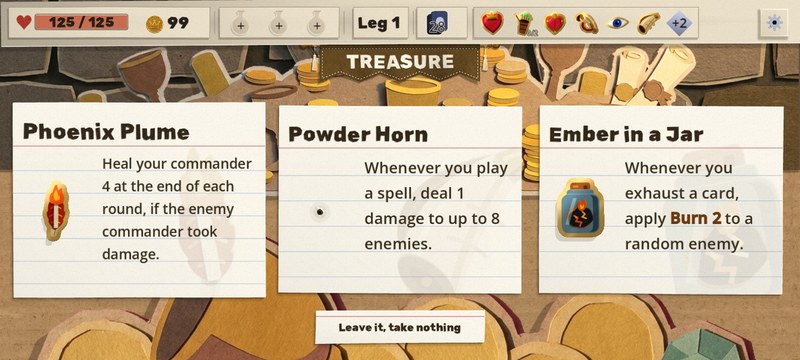
In the treasure vault the pin cards stand up off the floor instead of fading in see-through over the gold. The pin you take leaves a hole in its card and flies to the bar, and the room waits until it is pushed home before going back to the map.
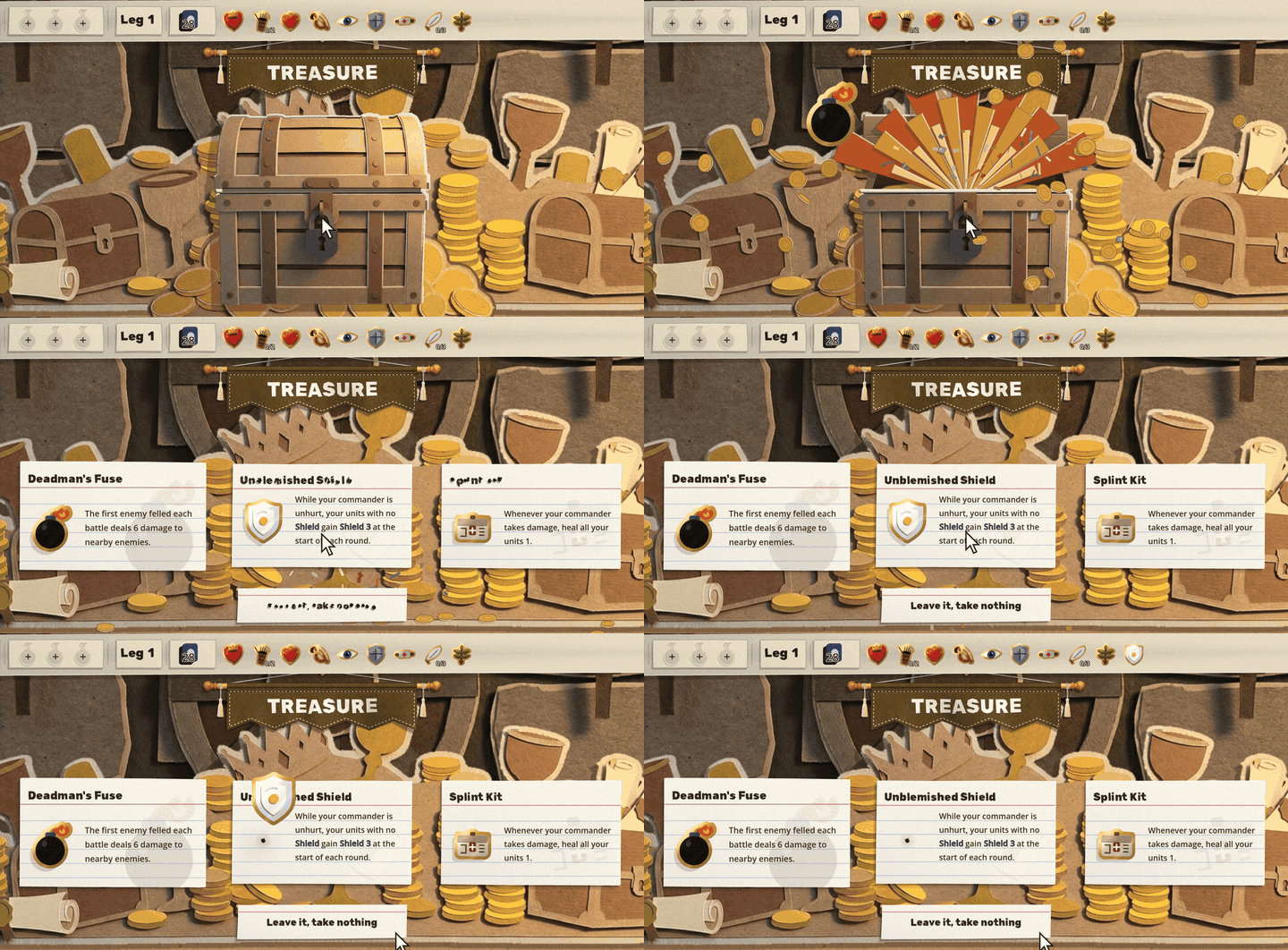
Every pin you take is pinned into the bar now. The newest always gets the bar's last slot, and the older ones step back into the "+N" count. Before, a pin with no slot left landed on the count as a sparkle and was never pinned in. On a phone the run bar is a single row of tiles.
Swearing a vow
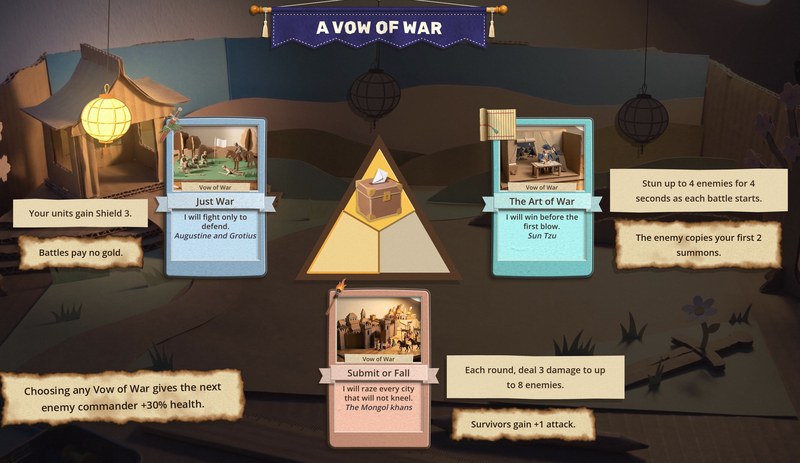
Vows now wait for your first win. Until you have won a march once, no vow stops on the map and the run bar shows no vow mark, so a first march is the three acts on their own. In co-op the party goes by the host's profile. On the first map of your first march with vows, Uncle Jim puts up a new note, "3 vows to Act 4", with a drawn loop: the pawn hops the three act cards, each card's corner flies into the vow triangle over a face-down fourth card, and card IV turns over.
Each vow's gain and cost now lie beside its card from the moment it is dealt, gain on clean paper and cost on scorched paper, so there is nothing to click to read them. A co-op playtester asked why they had to. On a phone there is no room for the notes, and one tap still reads a vow.
While you hold Hold to Swear, the vow's own picture tears through the room. When the hold fills, the picture pours back into the card, and the card is crushed into the shape of its corner and hammered into the triangle. It arrives white-hot and cools to its own colour.
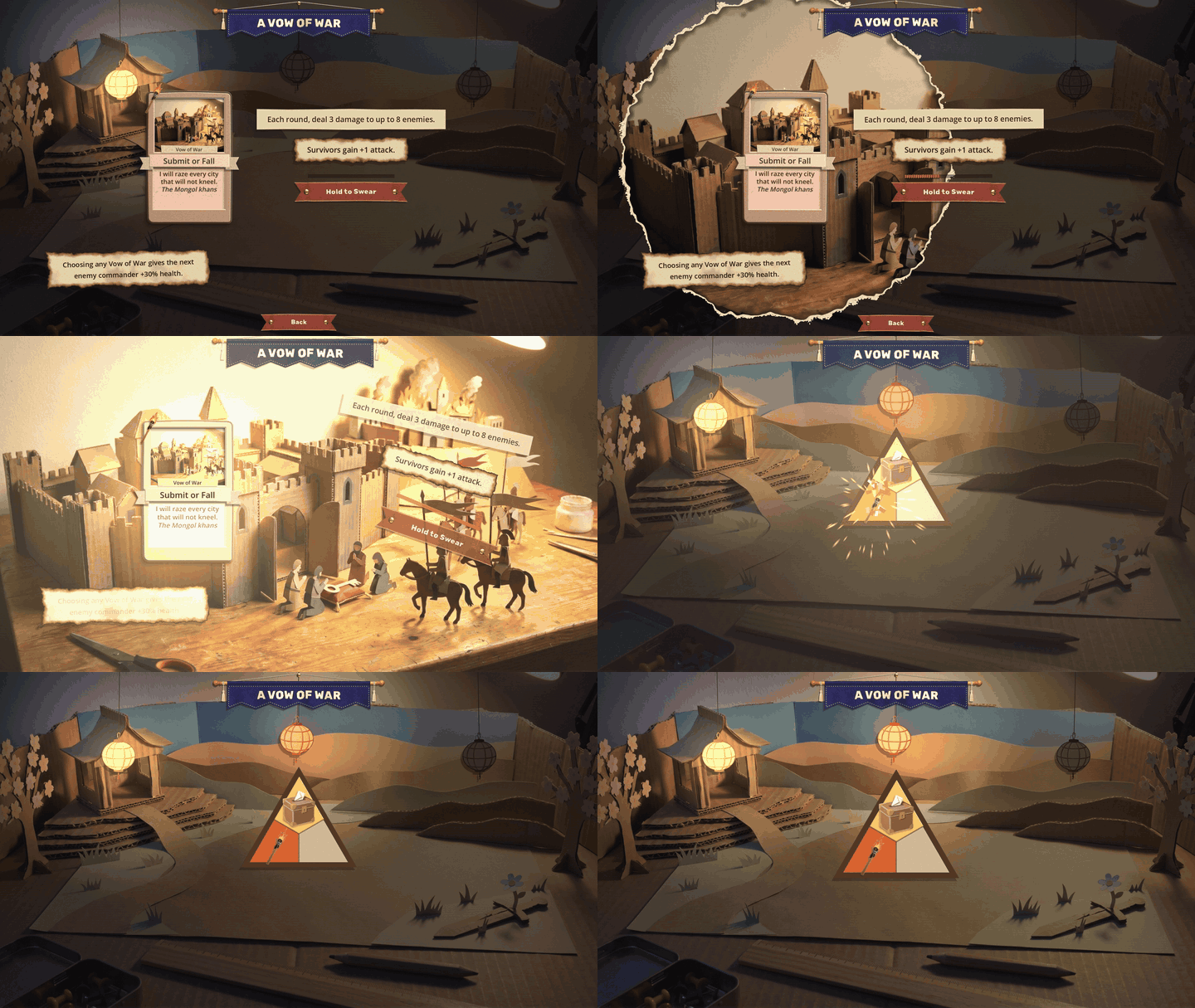
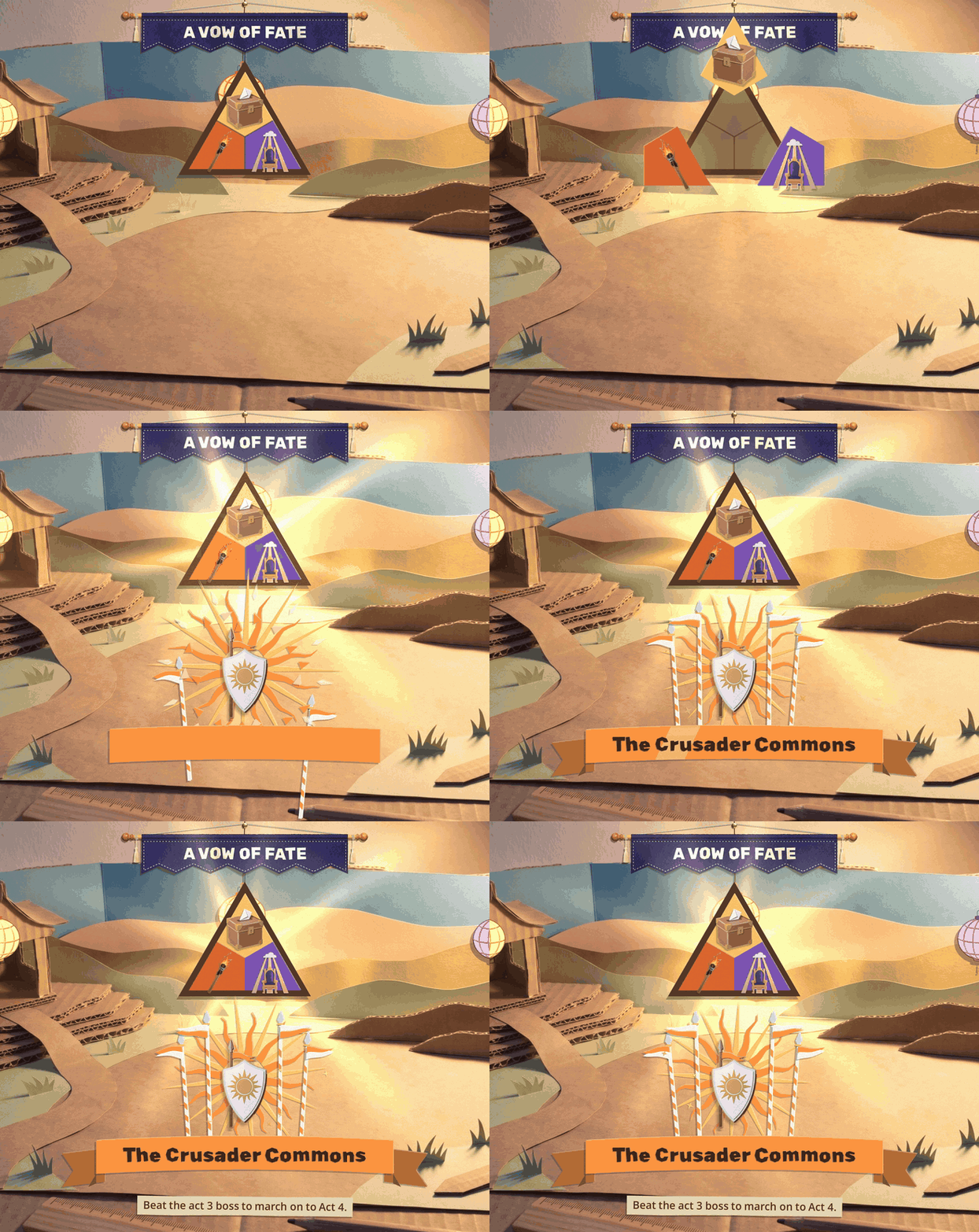
The third vow makes the triangle. Its corners part, hang and slam together, light bursts out, and the land your three vows make is named. Each of the 27 lands has its own crest, thrown out of the triangle, its own little paper scene, and its name unrolling on a ribbon in its colour.
Act IV
Act IV's last boss is now your previous build, not the one that just beat act 3. Before, a march with no friend's build waiting fought itself. Now it is a friend's unbeaten build if there is one, then your previous build, and only on your first march past act 3 the build that just won. In co-op no two mirrors are the same player's build.
A playtester's Act 4 boss died on its first turn. With no army on the board, a Kicked Anthill on each side traded wounds back and forth in a single frame until one commander fell. A pin answering a wound no longer sets off another wound pin. The AI that played that boss also kept playing a card that cost it health, so the card-playing AI shared by the mirror, Auto-play and co-op's AI seats now weighs what a play buys: it won't draw with nothing left to draw, or pay health in the last quarter of its own.
The mirror stands as tall as your warlord now (its doll was drawn a third shorter), a Power it plays shows its own picture instead of a stand-in flame, and its Commander's Heart breaks the way yours does, with the same banner, on every seat in co-op.
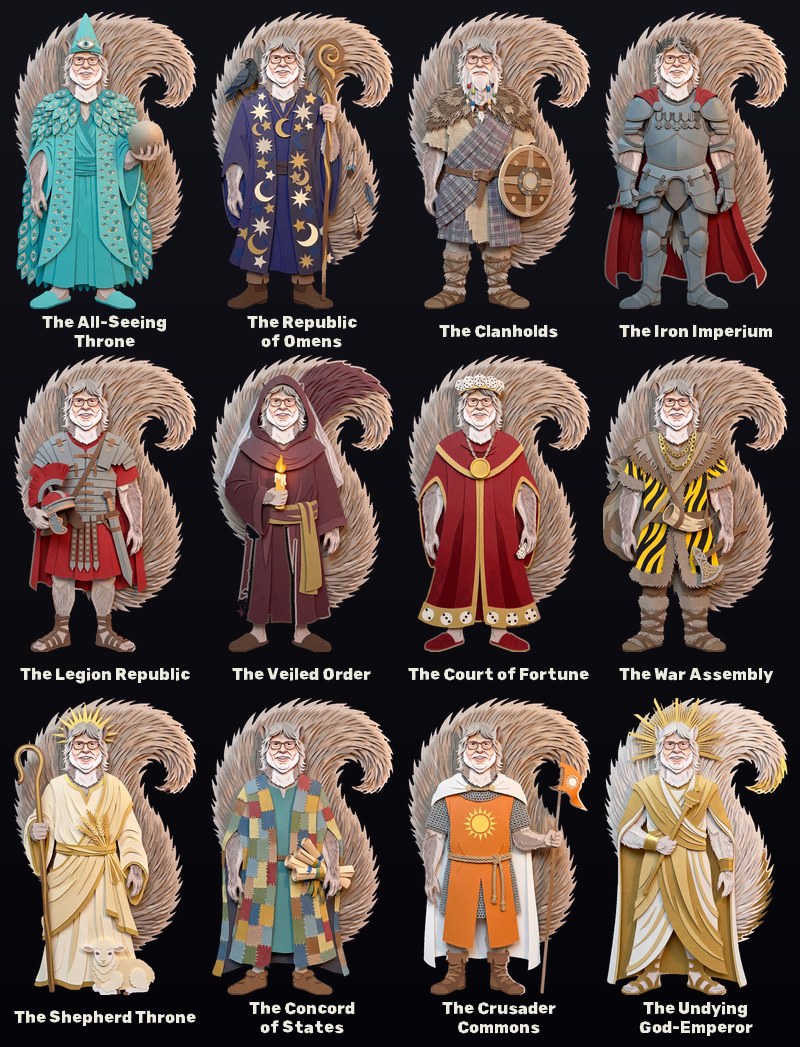
At the door of Act IV, Uncle Jim now dresses as the government your three vows make. There are 27 new portraits, one for each, and he keeps his on the Act IV map and in the coronation dance. Here are twelve:
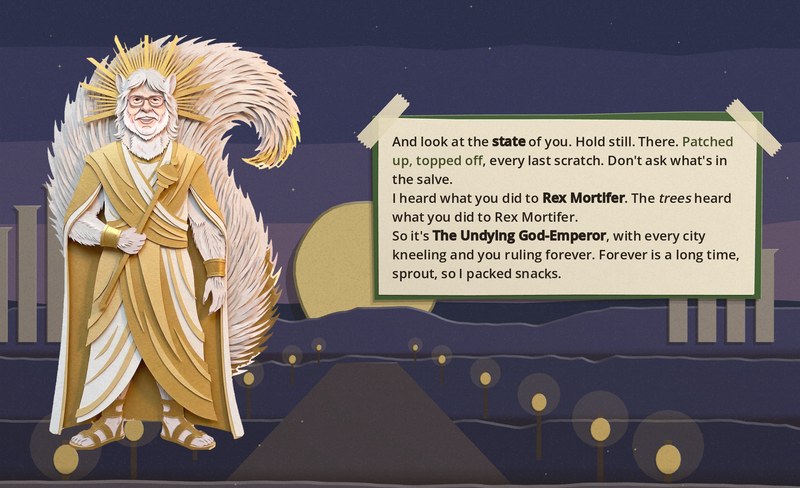
His walk-up on the road there has a third line, his word on what you stand for, one for each of the 27. For the God-Emperor: "So it's The Undying God-Emperor, with every city kneeling and you ruling forever. Forever is a long time, sprout, so I packed snacks."
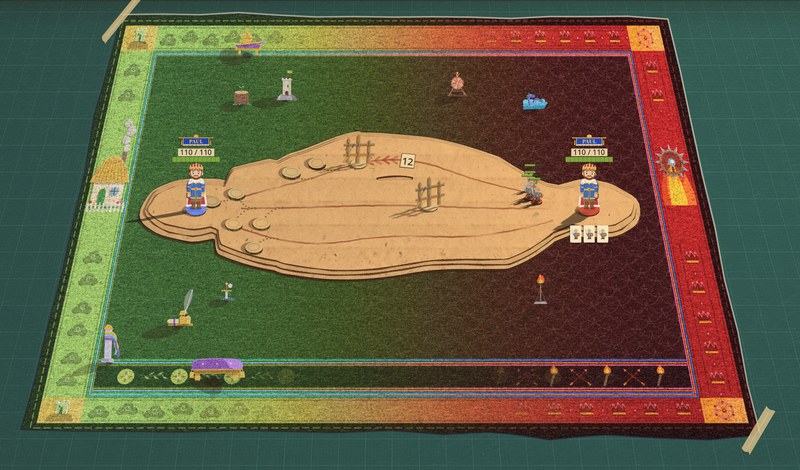
The carpet under the last fight is now two lands. Each of the 27 lands has a carpet of its own, with its crest's emblem in the side panels, its band in its own colour, and its three vows' colours as the stripes. Your land's carpet lies on your side and the mirror's on its side, blending into each other across the middle. A side whose vows make no land keeps the Throne's own midnight carpet, and so does the browser version, which leaves the 27 carpets out to keep its download small. Here the left side's vows make The Free Villages and the right side's The Conqueror's Wheel:
The toys round that field are the two sides' vows now, one for each vow, each in its own side's half and in its vow's own colour: the Assembly's ballot box, the Uncarved Block's stump and sprout, the Leviathan rising from its sea, Sun Tzu's bamboo book and command flag, the khan's torch, the Inner Citadel's tower, Fortune's wheel and its little king, and the throne under heaven's cloud. Just War keeps its broken sword. Click a toy and it plays. Fortune's wheel spins, and a hard enough spin throws the king off:
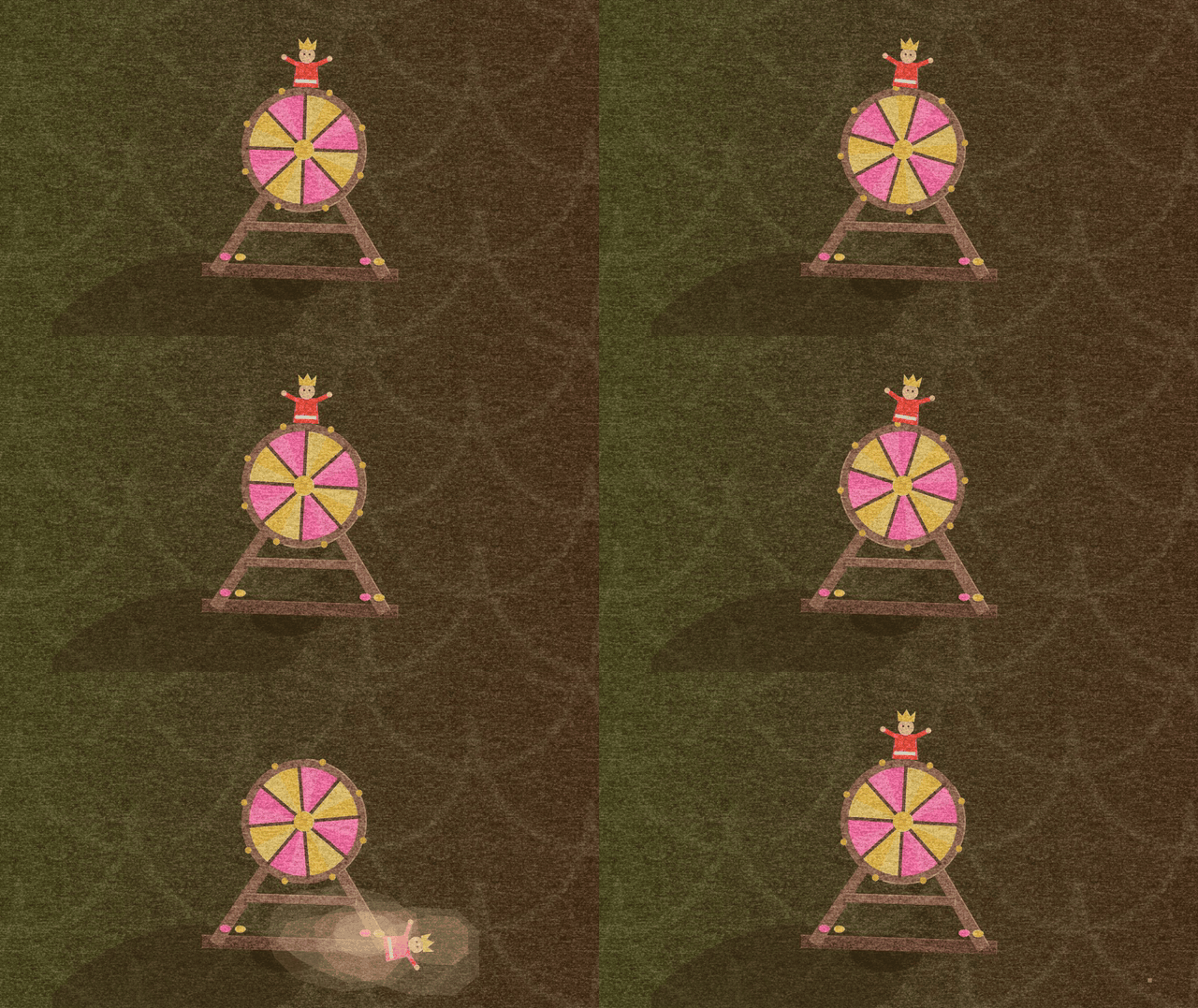
Finishers
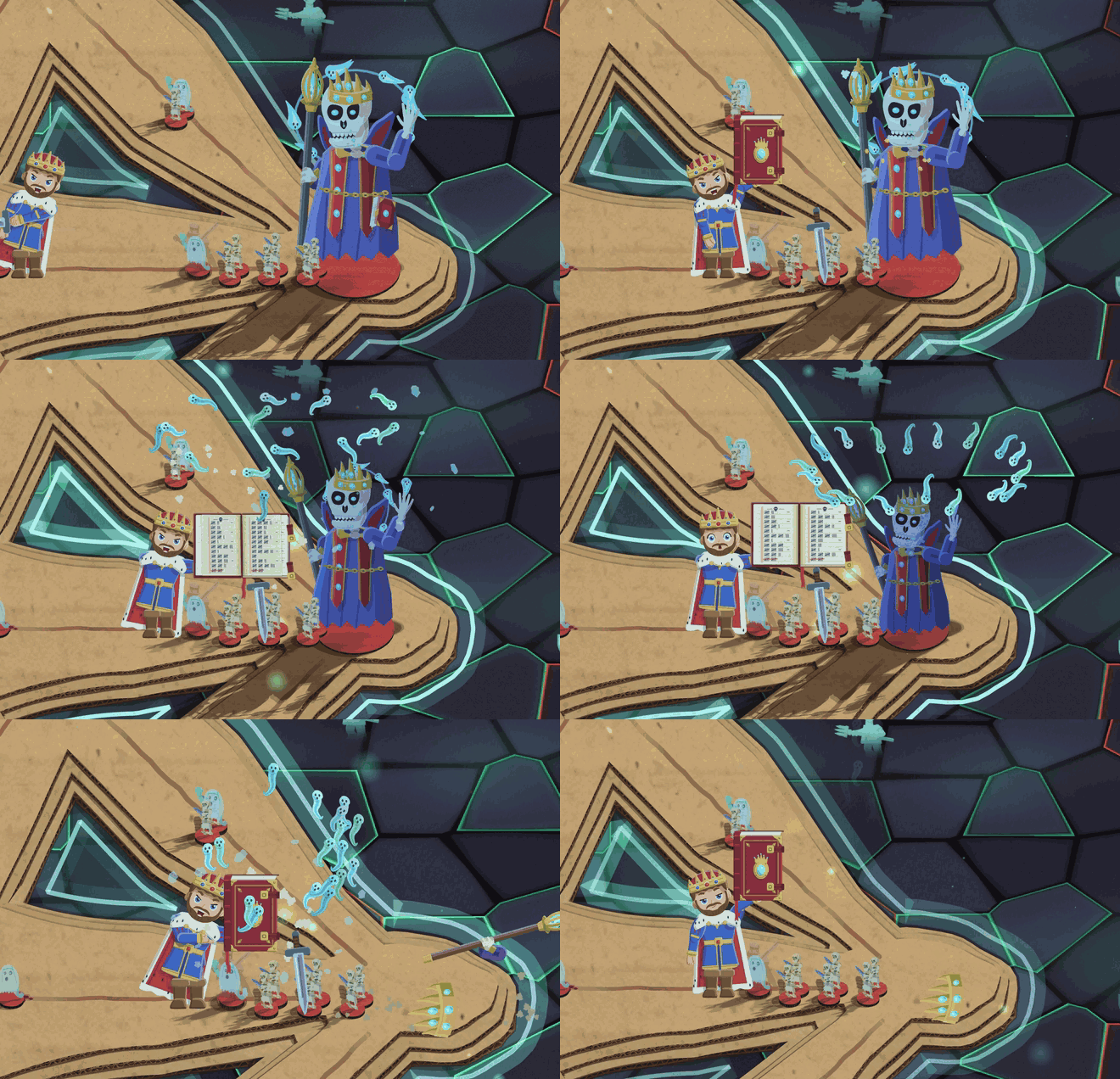
Rex Mortifer has a new finishing move, The Ledger Closes. The warlord ducks the hand that caught him at the false death, cuts the ledger off its chain and holds it open at him. Nine leaves turn, a soul tears out of each, and the souls drag him spinning into his own book, which is slammed shut. It replaces the soul jar crushed in a fist.
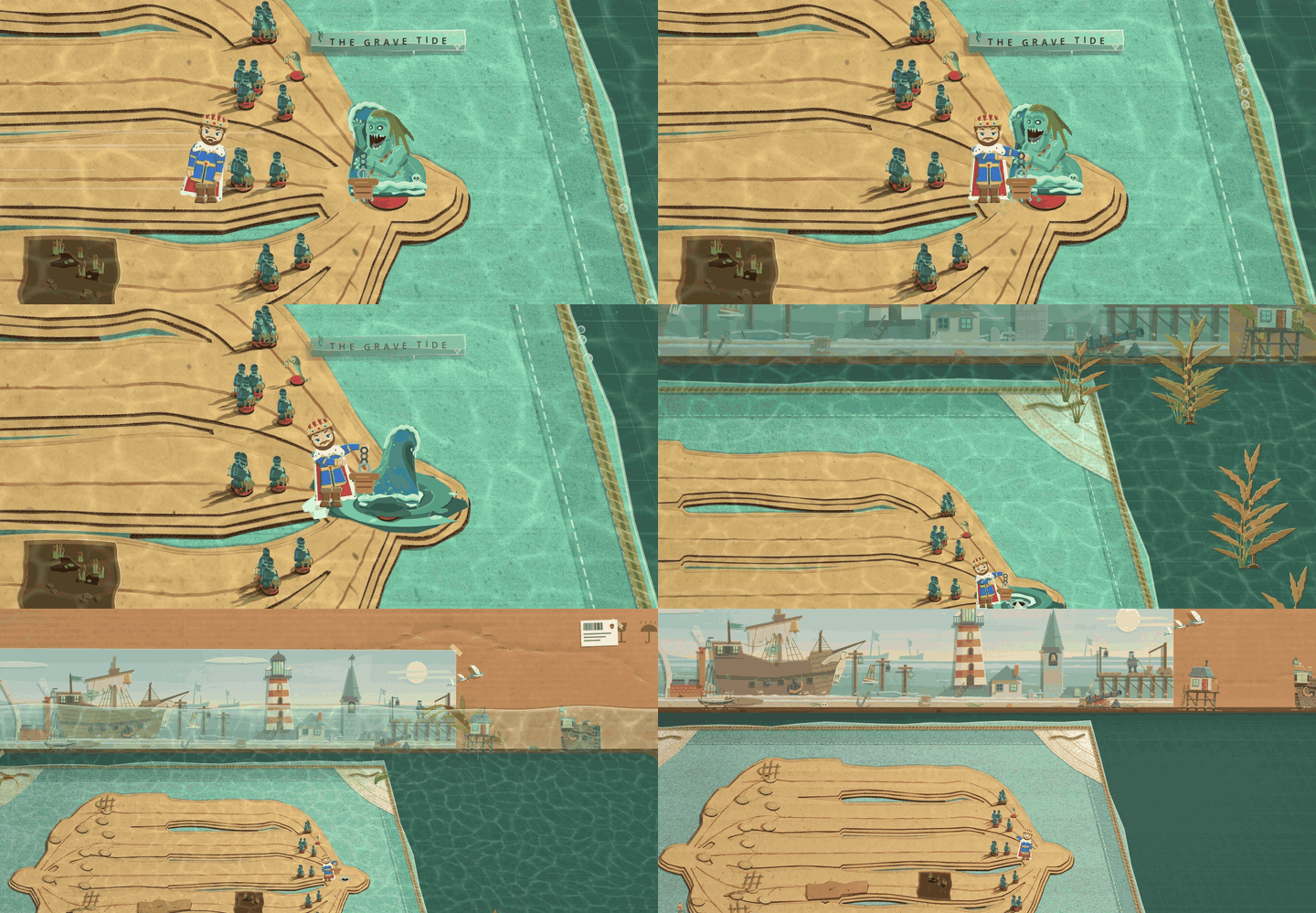
The Grave Tide's finisher pulls the plug. A paper whirlpool opens under him, he turns like a cut-out on a turntable as he goes down, a folded newspaper boat circles after him, and then the tide drains back down the wall.
When a boss's break changes the stage, the camera now glides back to take the whole change in and comes home afterwards, and the fight carries on while it does. Reduce Motion, or a camera you are dragging, keeps your view. Here is Simple Ton's turn, set off on its own without the banner before it:
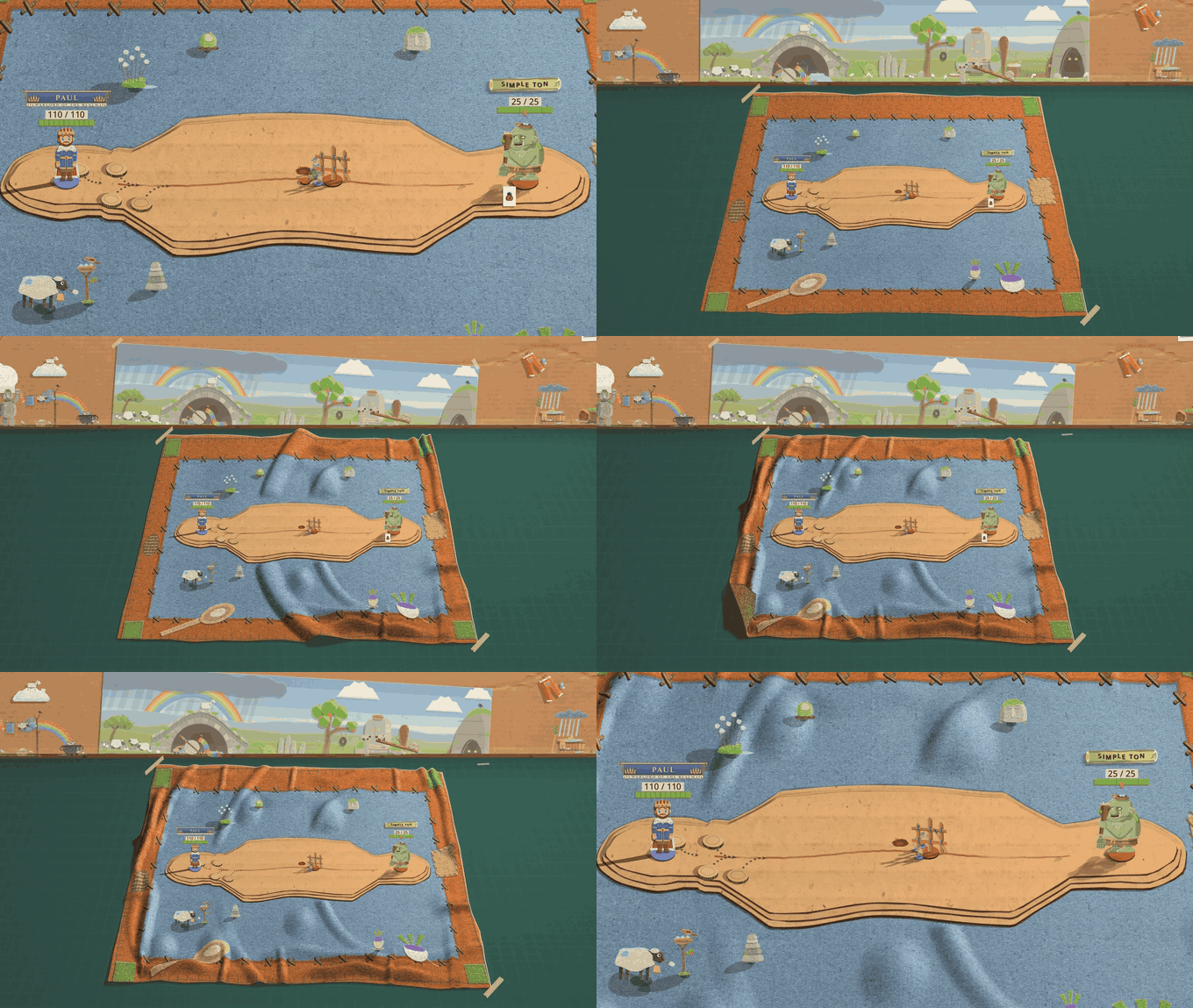
In battle
When an enemy spell is coming for your commander and he is off screen, a thin red arc on the edge of the screen points at him. It breathes faster as the spell gets close and flares if he is hit.
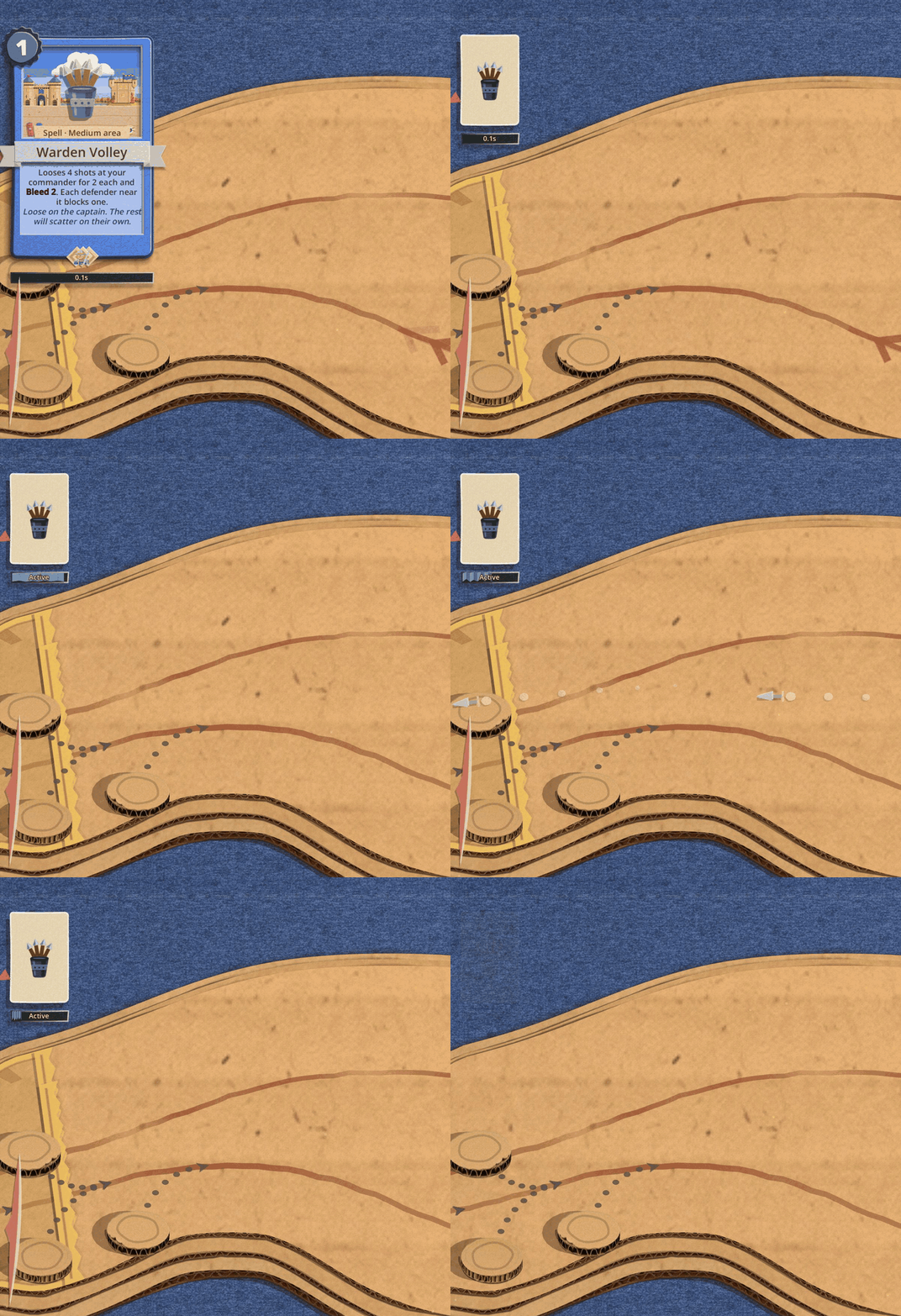
The gold guard ground a guard volley lays round your commander now stirs with its card. It swells out from him once it is laid, and again whenever you point at, tap or read the volley's card.
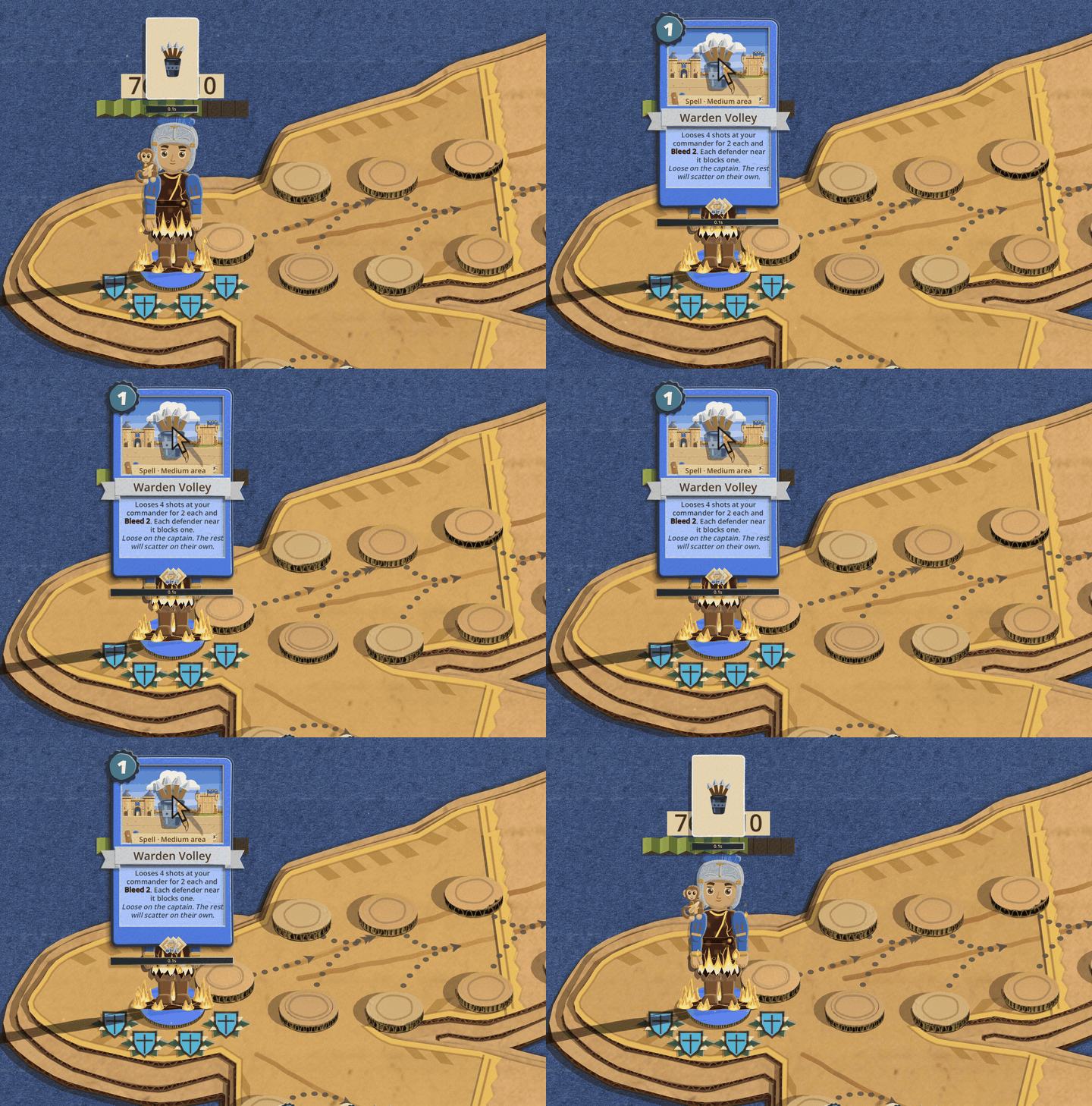
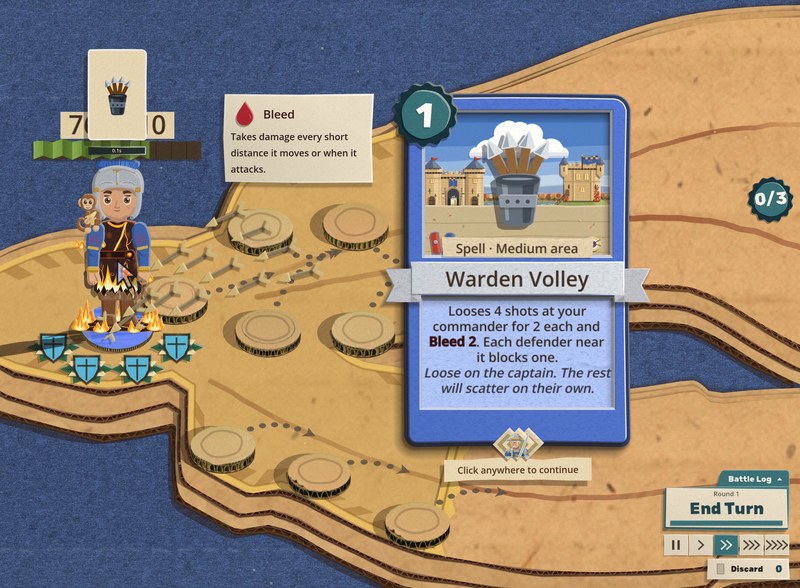
Every enemy card read now tucks your hand away, and nothing else stands up beside it: no unit card, no spell telegraph and no tip. One of Uncle Jim's notes already up steps out of sight until the last card is filed.
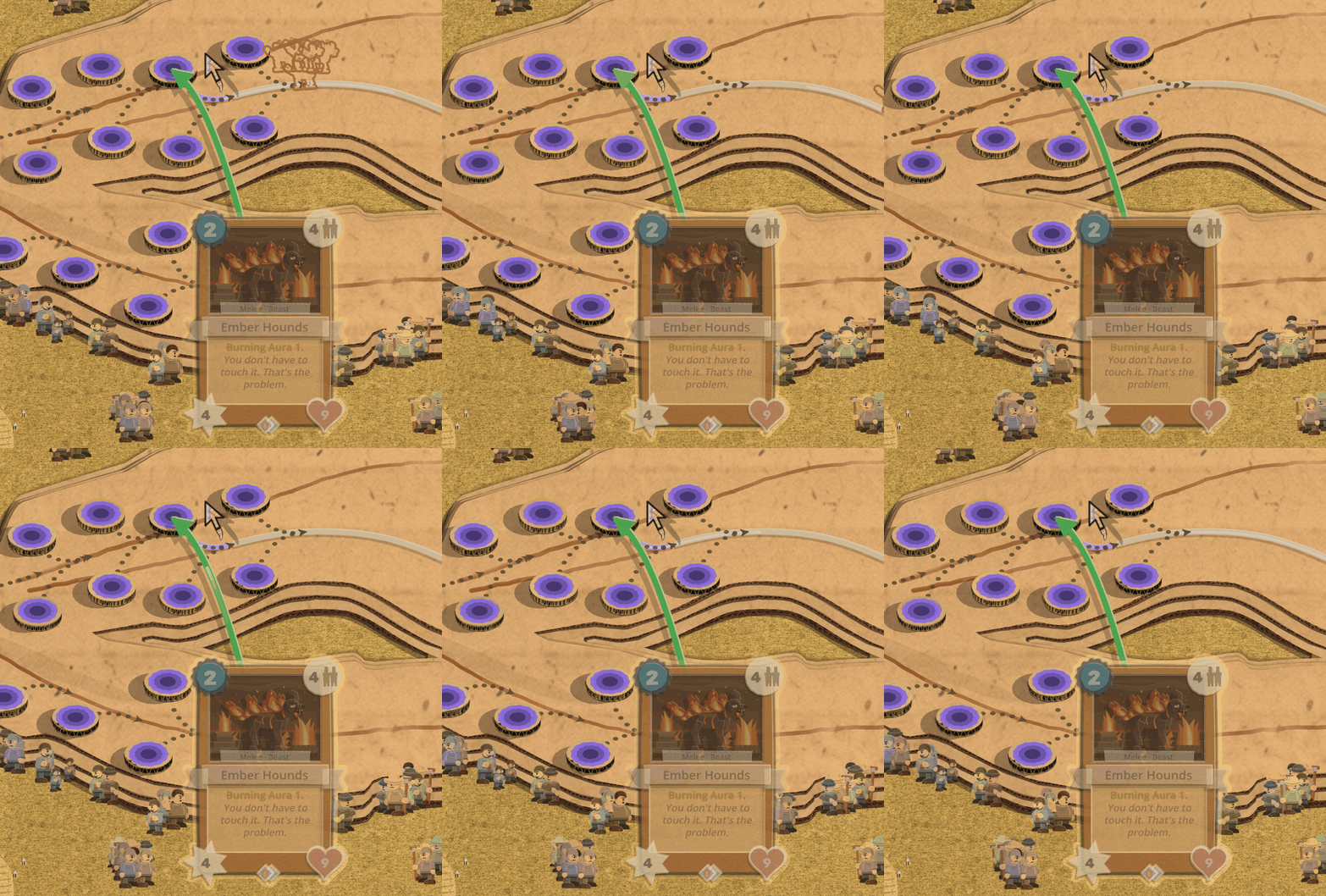
While a summon's arrow is green and locked on a spot it can land on, a faint glint runs down it from the card to the tip.
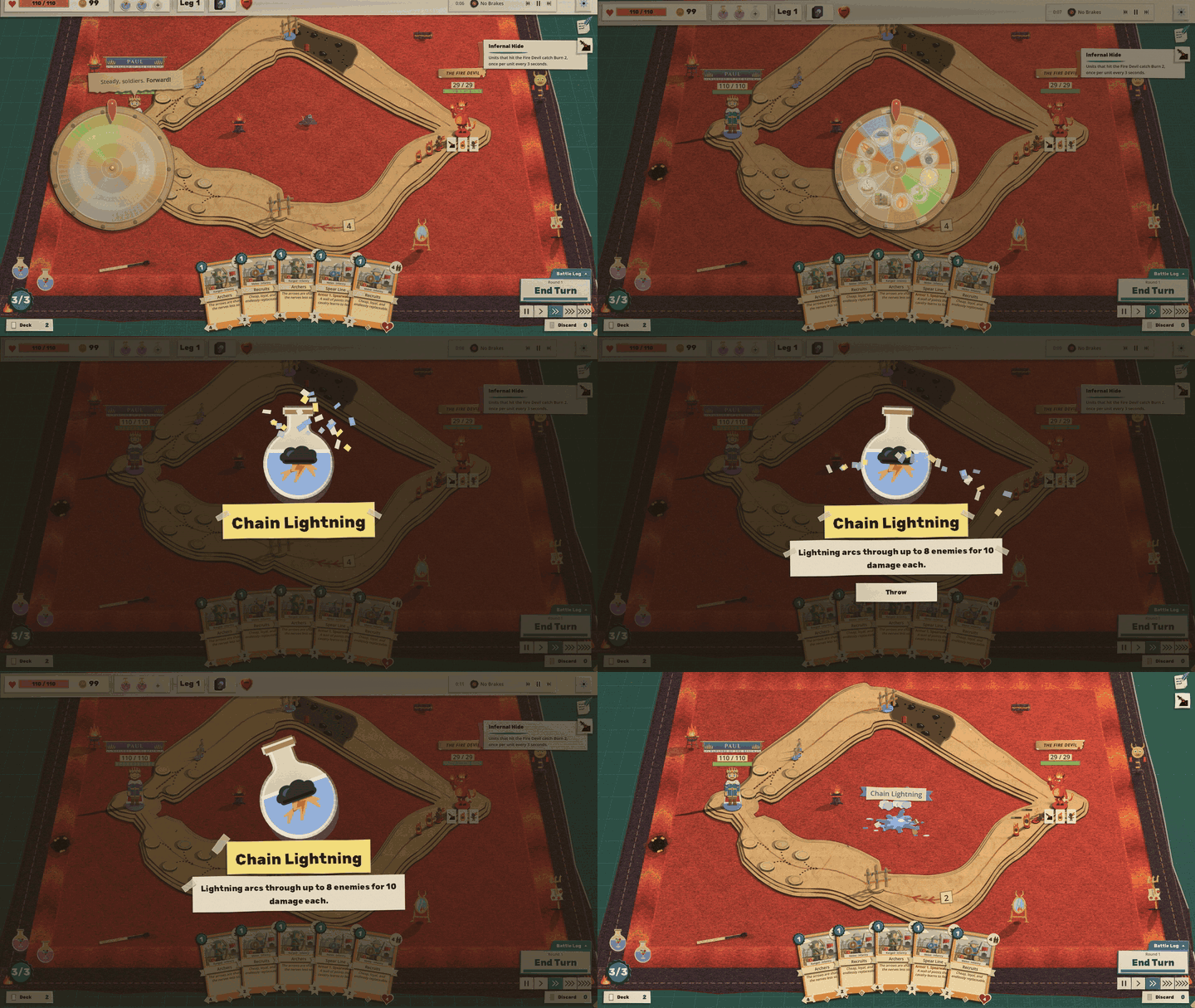
The Chaos Cocktail now holds its verdict up as a flask over the whole screen, with its name, a line on what it does and a Throw button, and the calamity waits for you to throw it. Every battle wheel spins faster now, and a click, tap or button press hurries it onto its wedge.
The Cyborg's Copy Chip can take a villager off Wally, and that villager now carries the moon with it. After 10 seconds on the field it turns into its werewolf, and 10 seconds later back again, with its wounds carried across. A ring on the ground round each one shows its clock. In this clip the clock is wound forward:
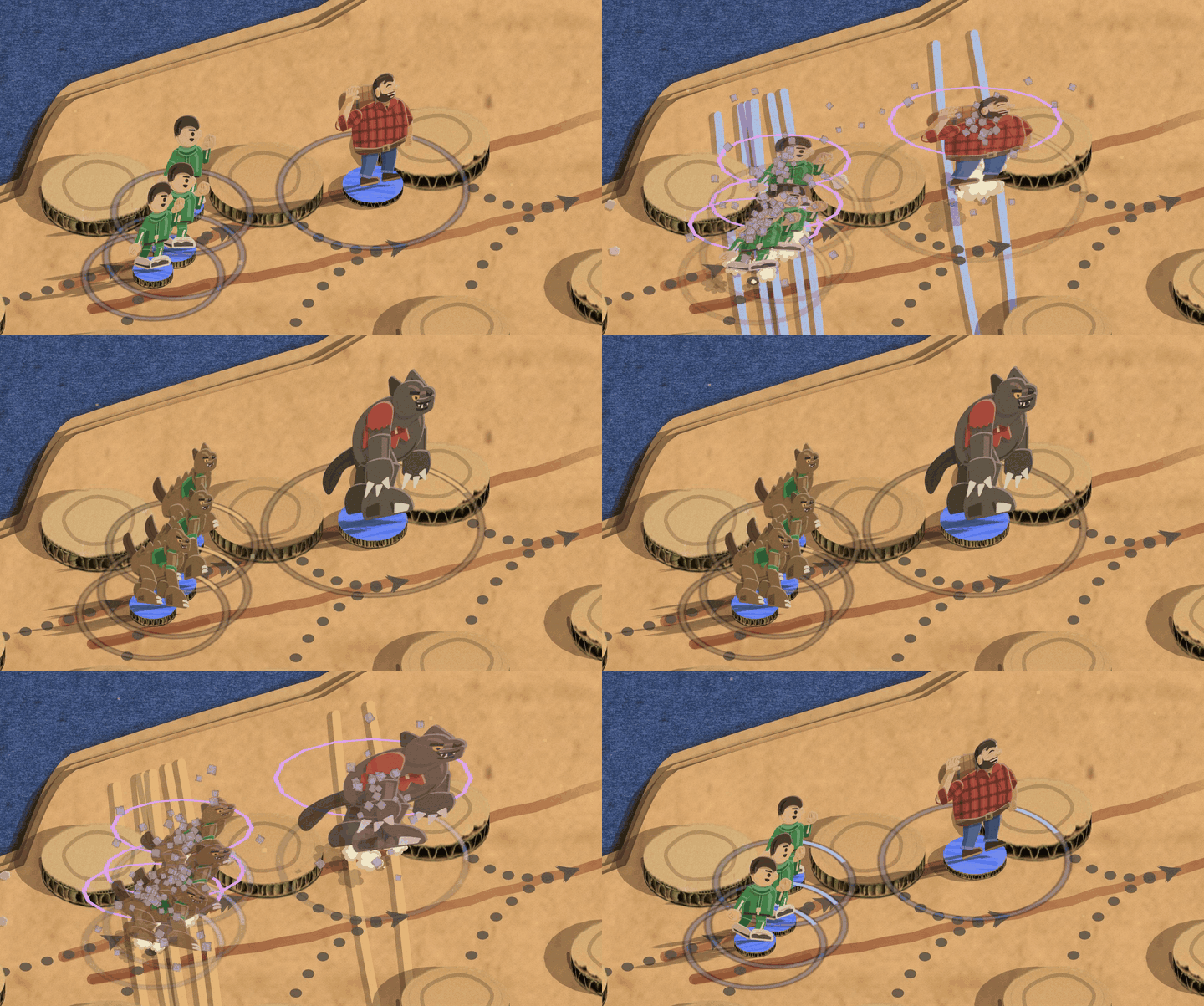
Coins tossed off a body under Colossal Stomp's foot wait for the foot to lift, so you can see them spin.
Between fights
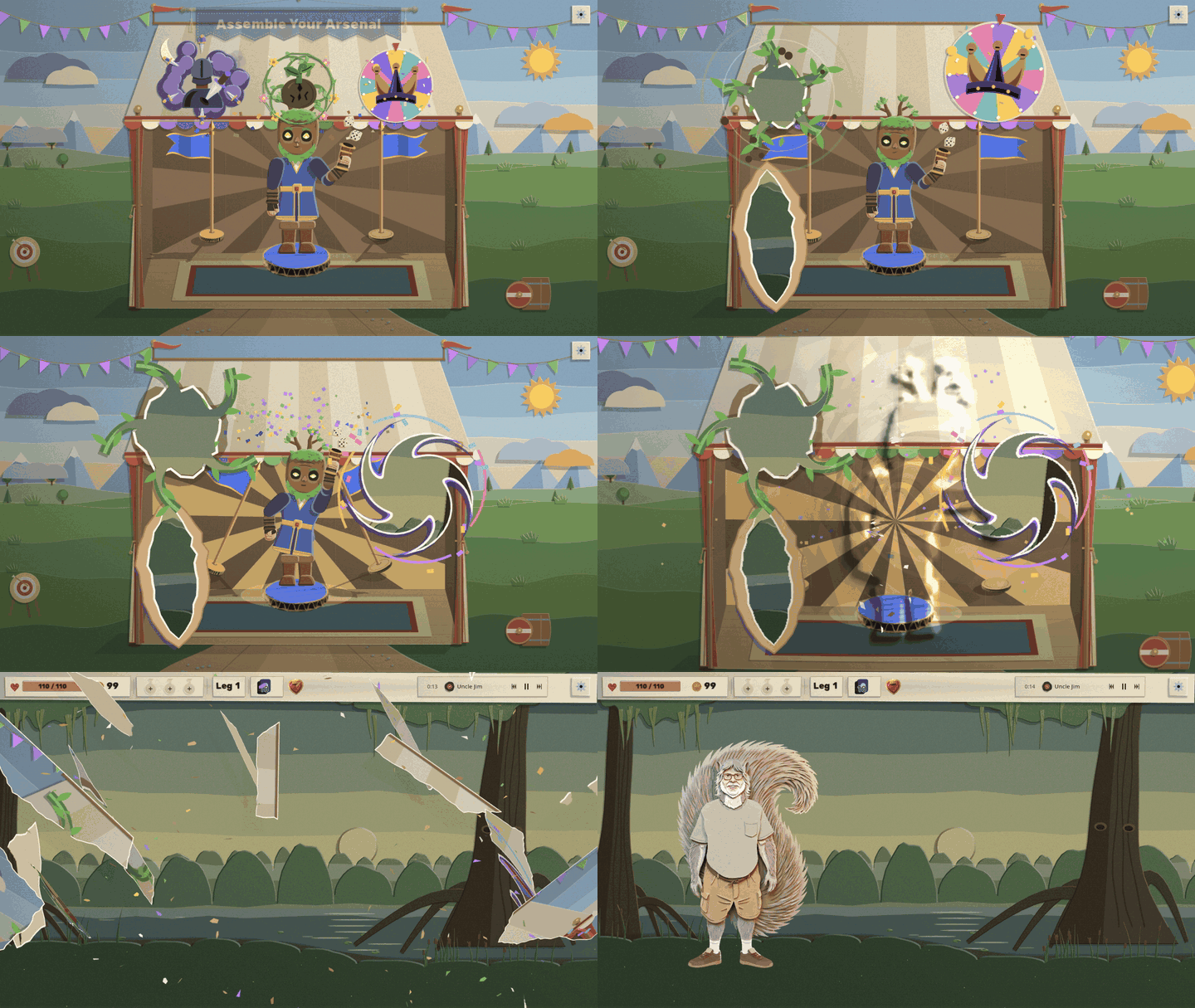
Leaving the draft, each pack's crest now flies at the screen and marks it its own way, and the warlord breaks through the paper along the marks. All 21 packs have their own mark and their own sound. Behind You! stabs through from behind and wrenches the cut open, Primordial Growth splits the paper along its roots, and Pandemonium wrings a whirlpool hole.
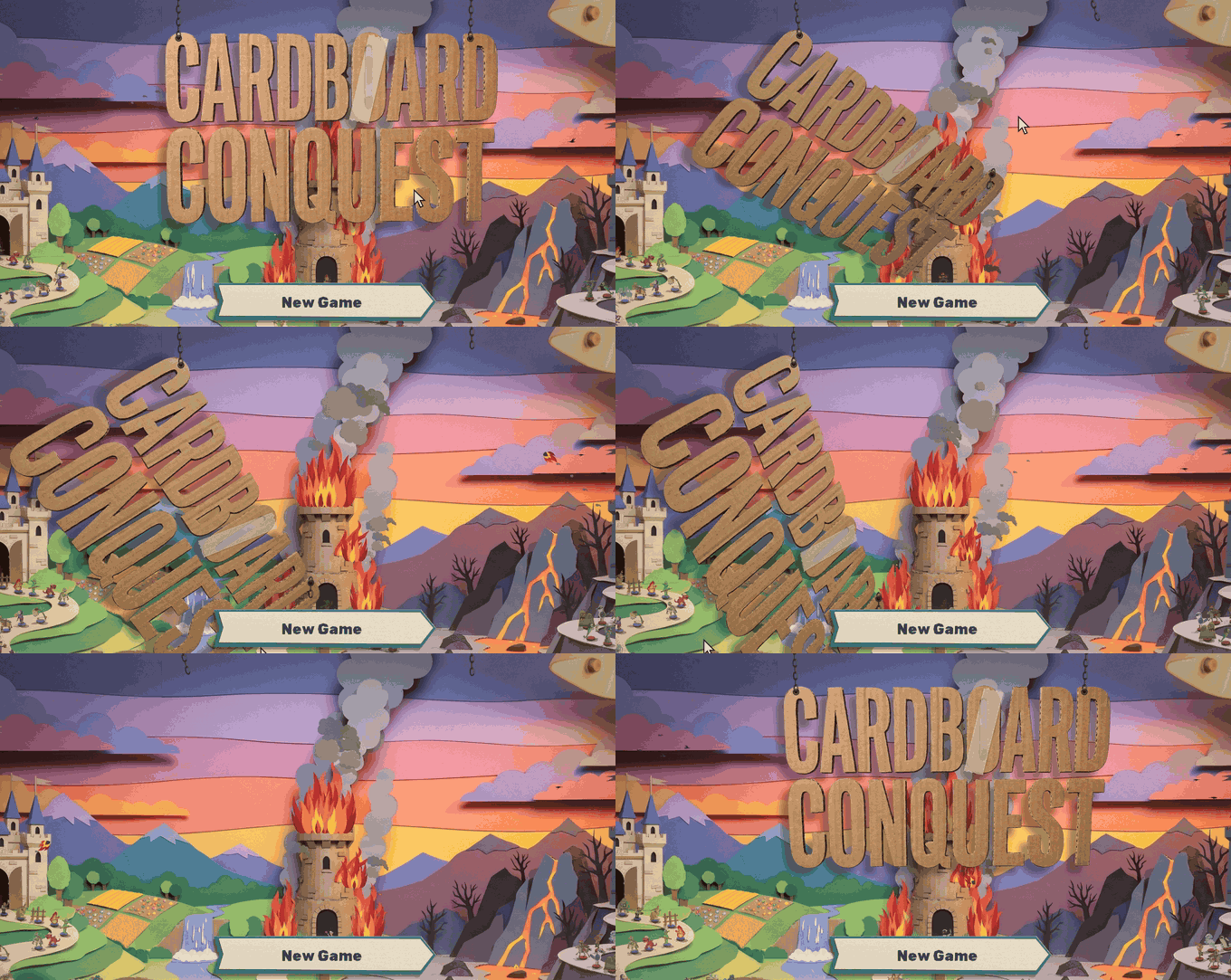
Click the sign on the title screen enough times and a chain snaps. It hangs and spins on the other one. A few more hits drop it, and a new sign swings down.
On the draft screen your sign hangs over your warlord's head, as it does in battle. Under his feet, the Back plate covered it on a phone.
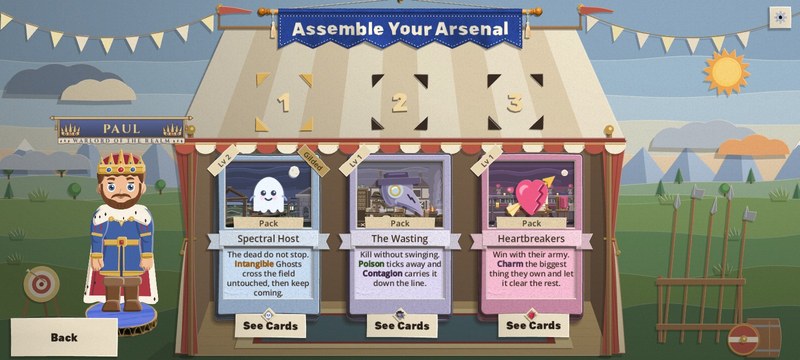
Your own achievement pops no longer carry the red "Achievement earned" caption, and a new warlord's painted sign is bigger on the pop.
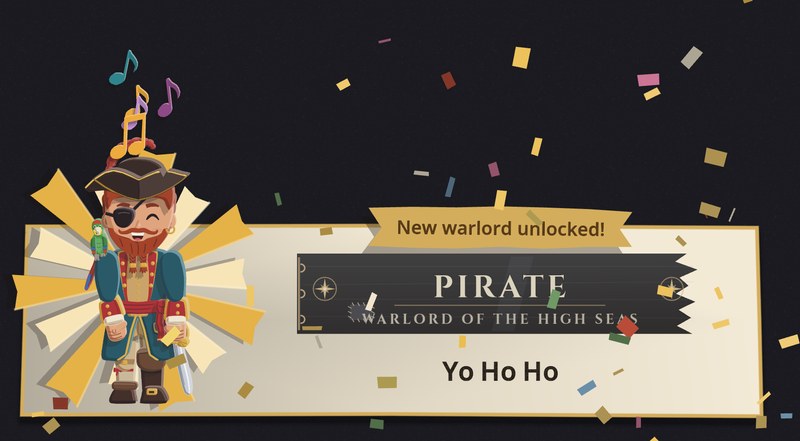
When a new warlord is revealed, the starting deck shows each card once, with "3 x" or "2 x" in cut paper before any you hold more than one of. On a phone the signature pin fills the left side of the stage.
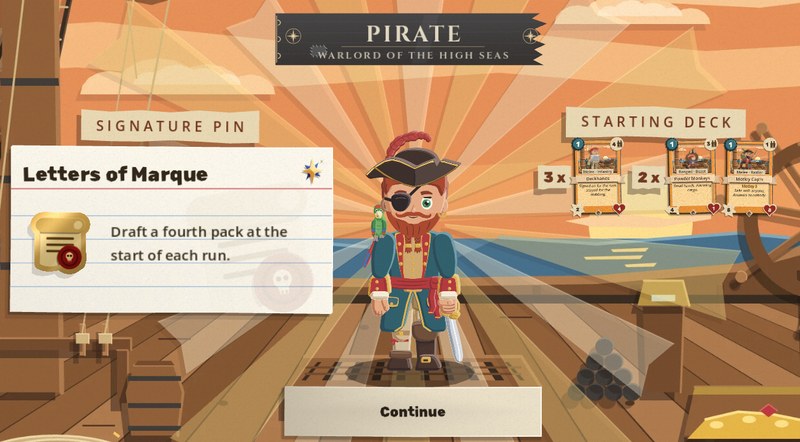
The Feather Bedroll now heals you fully when you rest in a craft room (it used to add 25% of your maximum health). Under the Eclipse Lens, which only lets you heal between acts, the Rest bed stands greyed out with nothing under it, when resting has nothing else to give you.
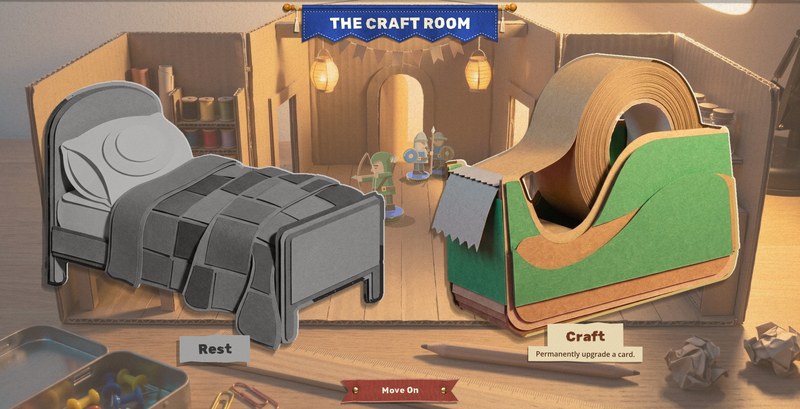
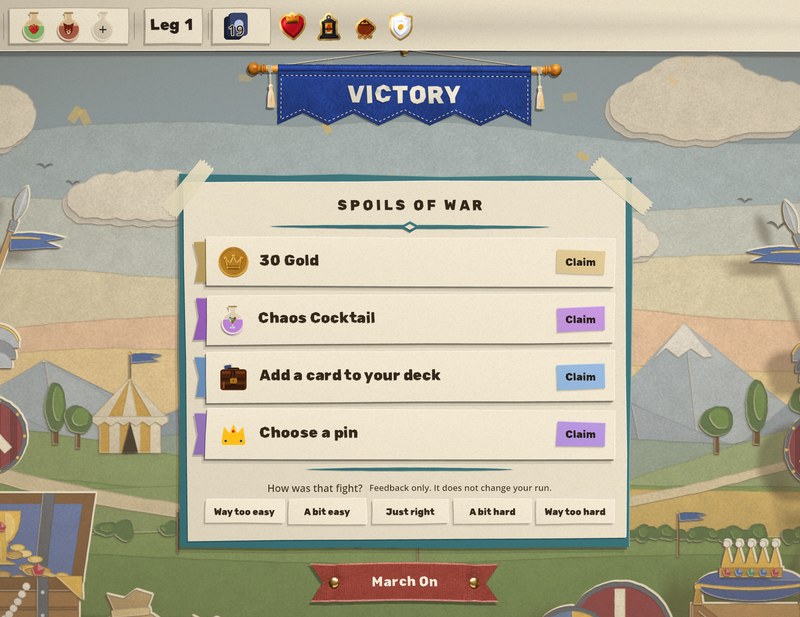
On the spoils, March On no longer asks if you want to leave rewards behind when you opened a pick and skipped it. It still asks about anything you never looked at.
Co-op
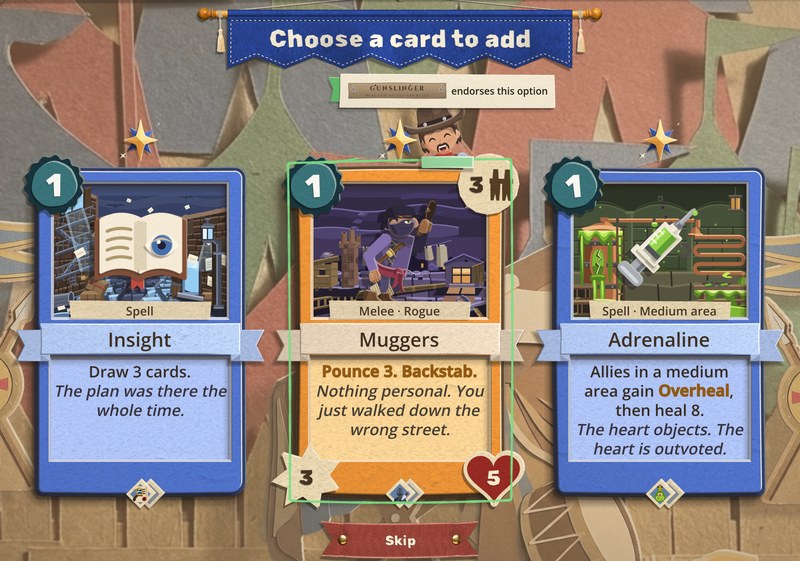
When an ally recommends an option, their warlord's face now pokes up on the card's top edge, grinning, and the card is ringed in their colour. Press the option you recommended again to take the recommendation back.
- Your own plaque in the wait window has a Pins button.
- A player is never seated as "Open seat"; the host seats them under their Steam name.
- An ally in a craft room is shown as "In the craft room".
On a phone
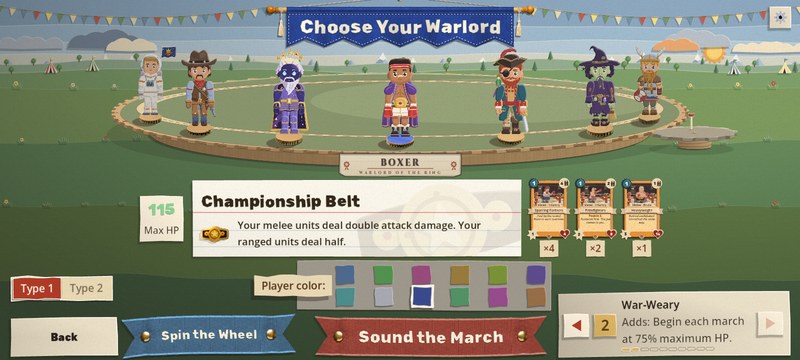
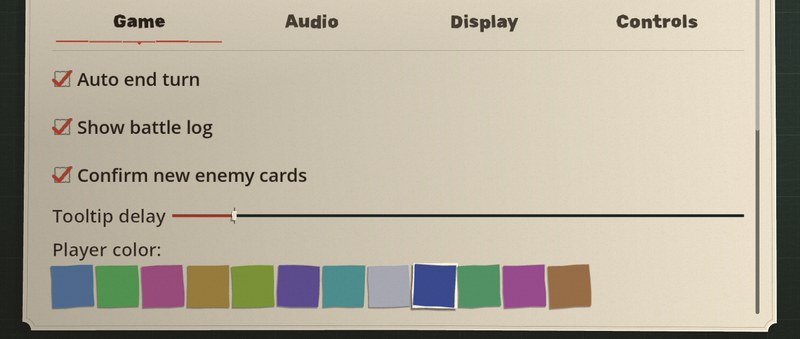
The muster shows all twelve player colours, in two rows of six, each a fingertip wide. It used to show one chip, yours, which read as the only colour there was. In Settings the colour chips are bigger too, and every word on the Settings sheet is 1.6 times the size.
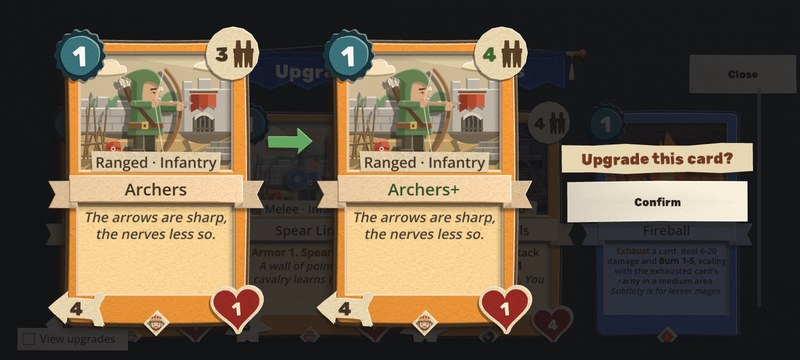
The upgrade confirm shows the card before and after at the full height of the screen, with the question and Confirm beside them.
A minigame's small board is brought up to fill the screen, up to 1.8 times its old size.
- Tap an open card in your hand again to set it down. On a pick from your hand, the card you are reading moves aside so it never covers Confirm.
- Pin picks fill the stage, and Uncle Jim's check-in and send-off sheets are cut to fit a phone.
- Many buttons, chips and tabs got bigger to tap: the title's corner buttons, the Compendium's tabs and rows, the map's ink tools, the battle's feedback quill, and every short button.
- A long event page scrolls instead of shrinking its words.
The Siege Works robot
The Siege Works pieces are a little wind-up tin robot now, with glass eyes in brass rims, cog ears that turn, a steam whistle on his lid, gears behind a round chest window and a key in his back. He has a new song too, "Come and Get It".

Also in this update
- Every enemy card's flavour line, the vow cards' oaths and Wally's last stand are now translated in all ten languages.
- Keyword tooltips say what the keyword does and stop. The fine print came off about 50 of them.
- An upgraded Instar is stronger from its first molt.
- The boar lord is just Gorehoof now.
- Feedback typed in another language reaches the developer with an English translation beside it, so write in whichever language you like.
- The first-launch notice about gameplay stats now says that if you send feedback, you may get a digital thank-you note.
- The Travelling Medic stands on the event's first page again, and has his left arm back in Bottled Three Times Over.
- The gambler in Double or Nothing is called "he", as he is drawn.
- A potion pulled off the belt is let go even when the bar rebuilds under your finger.
- A held map pencil no longer swallows clicks meant for a form over the map.
- On Uncle Jim's send-off, pointing at a pin that names a unit shows that unit's card, as on his check-in.
- On a controller, the highlight no longer rides a picked pack into the crest strip.
Known issues
- On a phone, in the chest-pick minigame, the two chests you did not pick fade out see-through.
- A lucky Flurry's "Nine Lives!" can peek out from behind Colossal Stomp's foot for half a second.
- An enemy volley's card can sit on the screen edge right over the new red arc.
This post went out to players on Steam and itch.io on 25 October 2026, and is kept here. Comments and questions are read on either of those, in the Discord, or through the quill in game.