
0.7.9: the moon comes up red and never sets

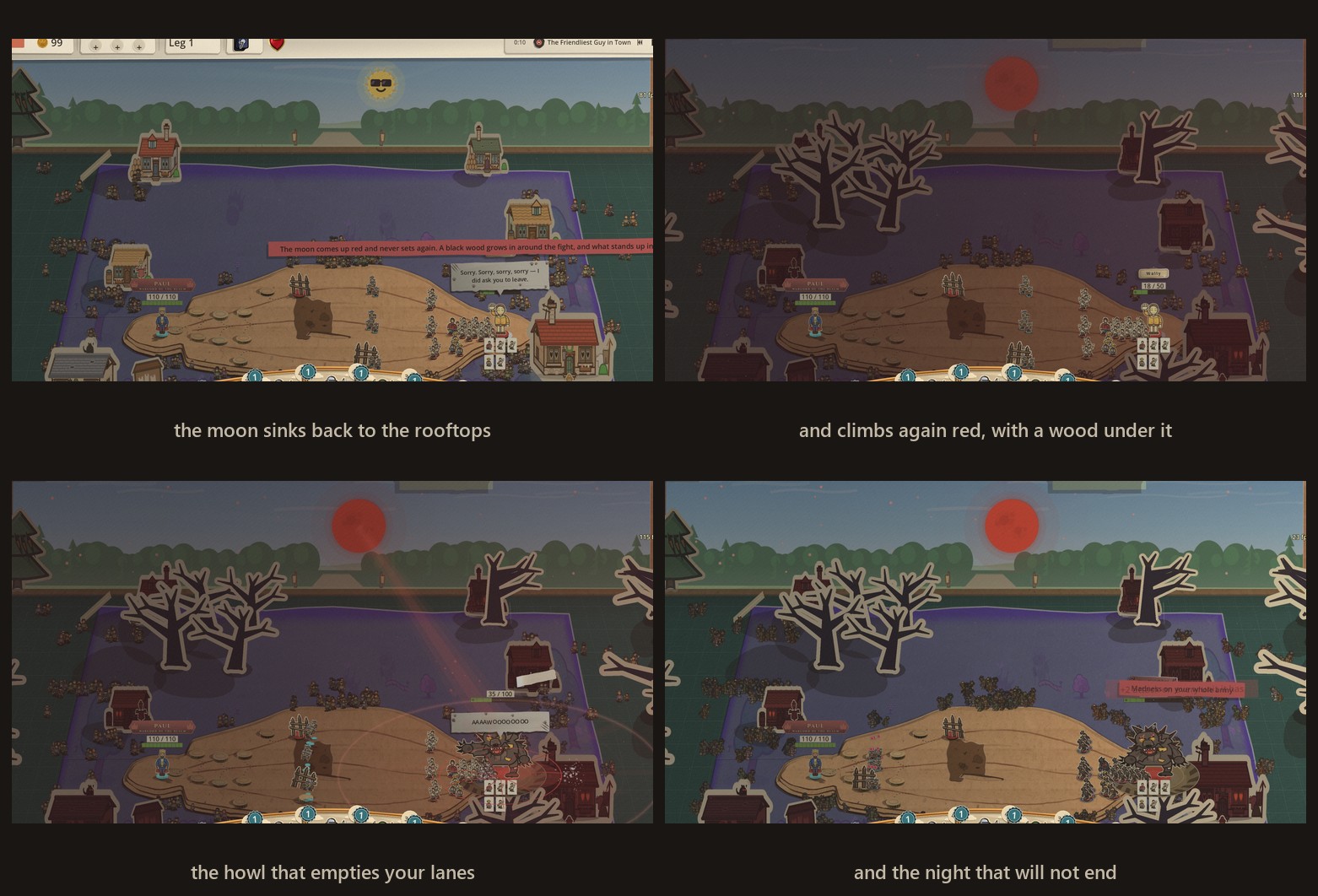
Wally has always been the boss who turns into something else. Until now he only turned once. This build gives him the ending the whole fight was walking toward: at nought health the sky is dragged round a second time, the moon comes back up red, a black wood grows in around the board, and what stands up in that light is not Wally and does not answer to the name.
The blood moon
Every other act boss in the game stands back up when you kill it. Wally never did, and the reason was good: his moonrise already doubles his health and turns his whole village into wolves, so a second life on top of that was a third. He has one now, and his health bar moved from 26 to 50 to pay for it.
It works like this. Land the killing blow and the sky does not stop, it reverses. The moon he already dragged up sinks back to the rooftops, and then climbs the far side of the boundary again, bleeding copper as it comes. The palette of the whole village goes with it, and so does every shadow on the field. Then the light finds him, his bones go a second time, and he howls, and the howl throws your entire line back down its lanes and leaves Madness in all of it.
Then the clock stops. A blood moon does not set. There is no dawn coming to halve his bar and walk his wolves home, so the night book, the doubled health and the pack are what the rest of the fight is fought against.
The Neighbor
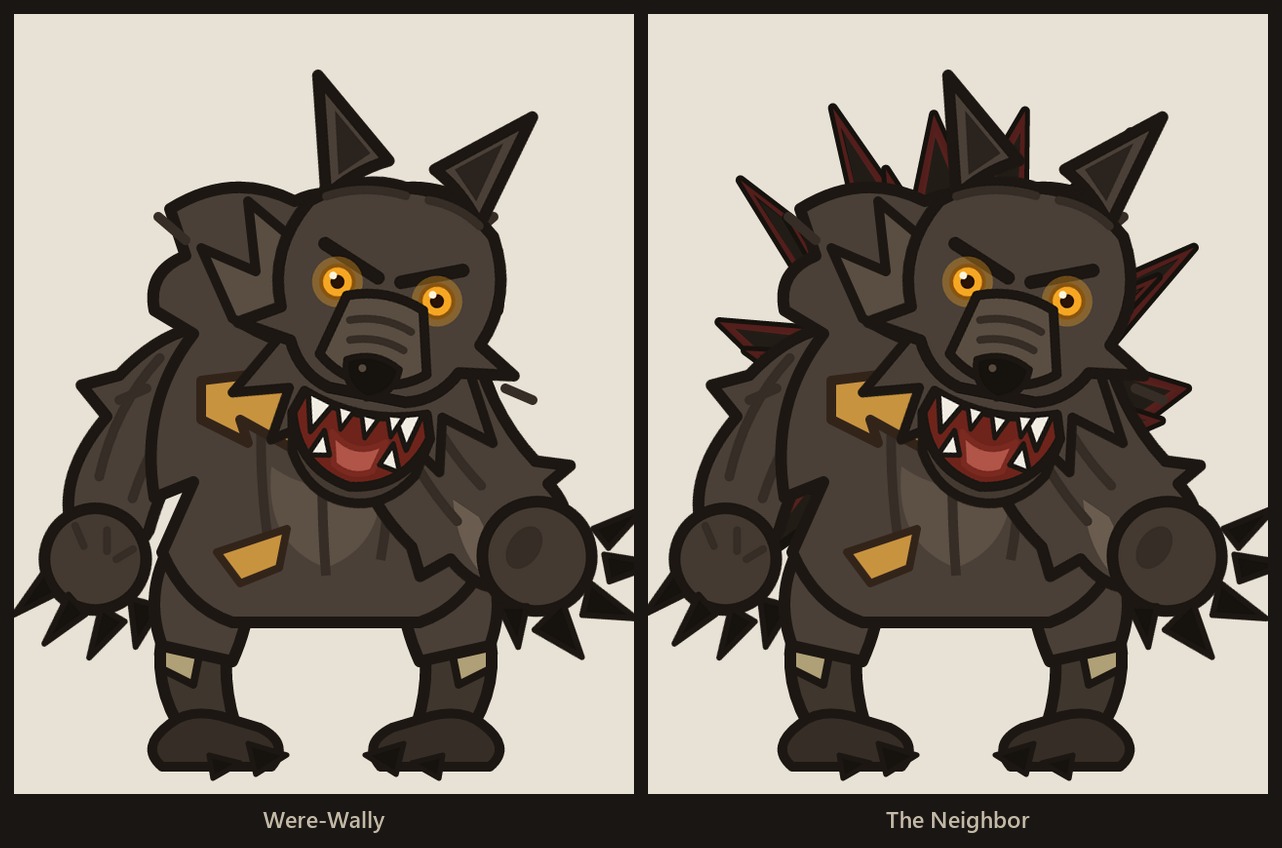
The thing that stands up is Were-Wally with his hackles raised. Same wolf, same four sheets of paper, plus the one thing his last stand grows: a ruff of raised fur that stands out past both shoulders and frames him without covering his face. He is a third again as big and hits half again as hard.
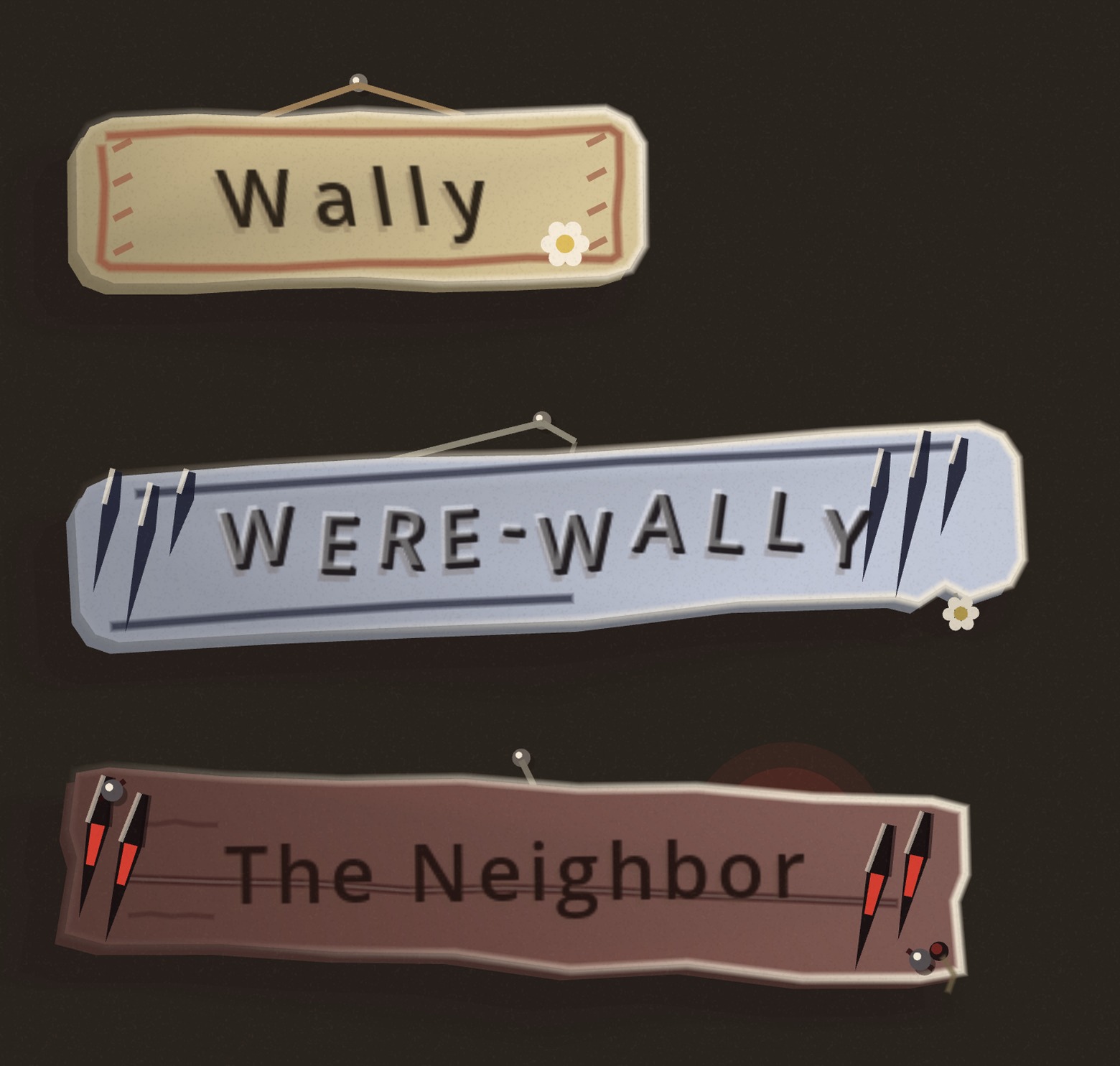
His sign is the third state of one piece of wood, and that is worth looking at all at once. Wally hangs a friendly shingle from two good strings, with a painted border, stitched hems and a daisy on it. Were-Wally's is that same shingle after moonrise: one string snapped, the sign swinging from the other, claws dragged through both ends and the daisy hanging upside down by a thread. This one has stopped hanging. It is nailed flat through opposite corners by something that does not own a hammer, split along the grain, and the claw gouges go clear through the wood with the red moon showing in them. Where the daisy was there is a nail hole and a dry stem.
The wood
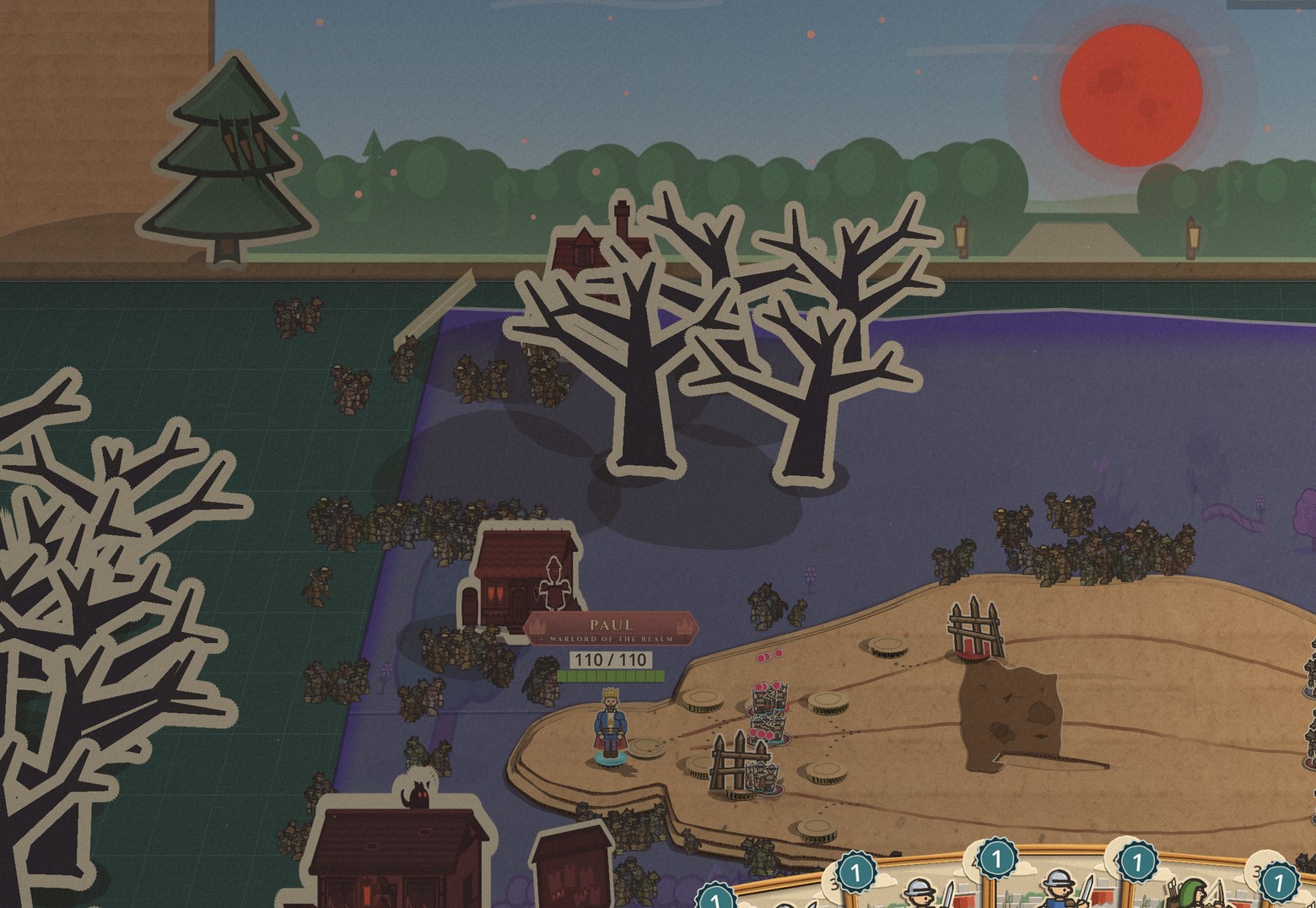
The village spends the whole fight being a village. Cottages, a noticeboard, a sundial, a street of neighbours watching from the verge. The last stand takes that away. A wood comes up through the ground the crowd is standing on, tall and bare and black, every limb forked out and reaching in over the board, and the fight finishes inside it.
They come up in rings out of him, on the same beat the light changes, and they keep leaning for the rest of the fight. They are pressed out of card like the cottages are: one blade round the whole silhouette, a folded easel behind, and the desk lamp's own shadow thrown off them onto the mat.
Two things in the village that were wrong
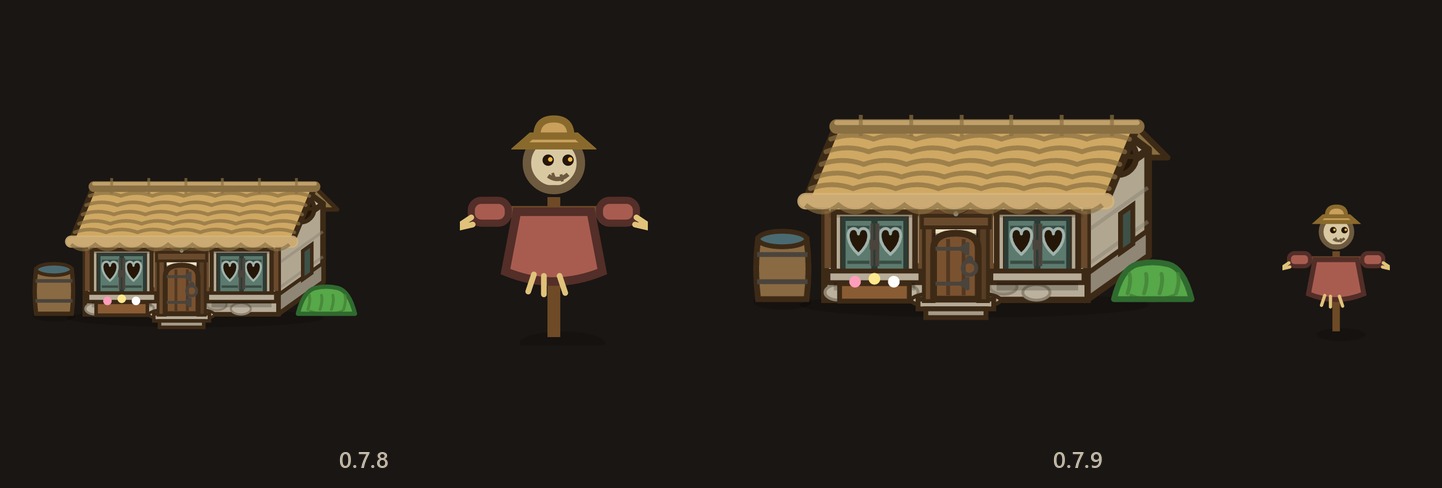
The scarecrows were bigger than the houses. A scarecrow is a coat on a pole and a cottage is a building, and on this square the tallest scarecrow was standing level with the ridge of the house next to it. They are about two fifths of the house nearest them now, which is the proportion a real yard has.
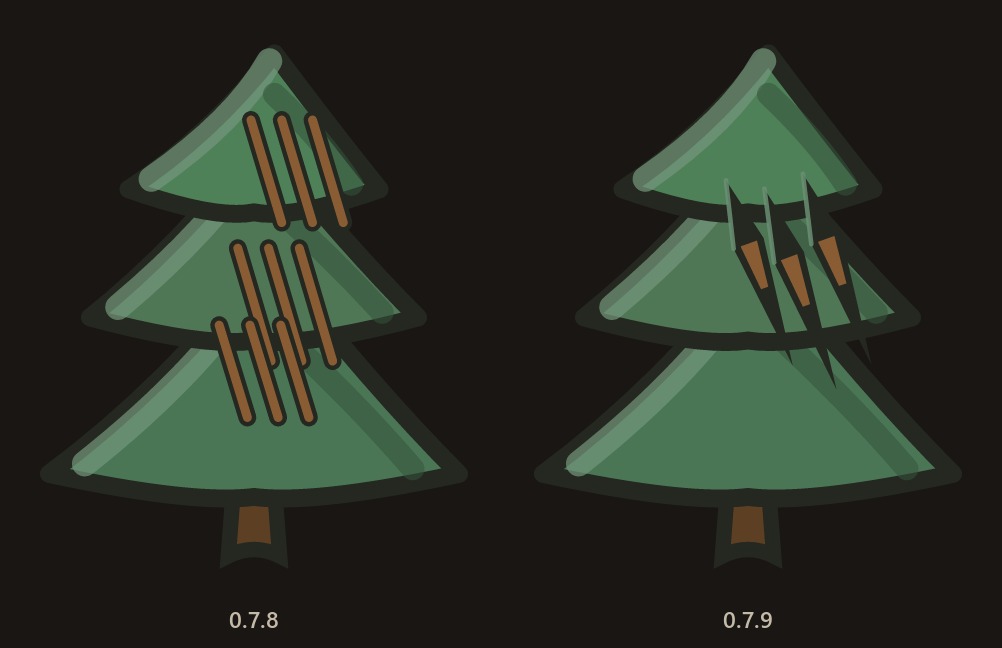
And the meadow keeps a pine with claw marks in it, which is a nice piece of storytelling that was being told badly: nine brown strokes painted across the branches, in a brown close enough to the trunk that they read as nine sticks lying on the tree. It is one swipe now, and the rakes are tears rather than stripes, with bare wood showing where the wound is actually open.
This post went out to players on Steam and itch.io on 10 September 2026, and is kept here. Comments and questions are read on either of those, or through the quill in game.